Men’s Activewear MOQ Guide: T-Shirts, Shorts, Hoodies and Joggers
Men’s Activewear MOQ Guide: T-Shirts, Shorts, Hoodies and Joggers
Minimum order quantity, or MOQ, is one of the first questions brands ask when contacting a men’s activewear manufacturer.
How many T-shirts should you order? Can two colors share the same MOQ? Do hoodies require a larger order than shorts? Can different sizes be mixed in one production run?
There is no single MOQ that applies to every men’s activewear product. The final quantity depends on the fabric, garment construction, color, logo method, trims, size range and level of customization.
For fully customized cut-and-sew men’s activewear, a practical starting point is often around 300 pieces per design. However, the actual MOQ may be lower or higher depending on whether the brand uses an existing style, available fabric, standard colors or fully customized materials.
This guide explains how MOQ works for men’s performance T-shirts, training shorts, hoodies and joggers. It also shows how new and growing fitness brands can plan a first order without creating unnecessary inventory pressure.
What Is the Typical MOQ for Men’s Activewear?
The table below provides a practical planning reference for common men’s activewear categories.
| Product | Typical Planning MOQ | Main MOQ Factors |
|---|
| Performance T-shirts | Around 300 pieces per design | Fabric, color, fit and printing |
| Training shorts | Around 300 pieces per design | Lining, pockets, waistband and panels |
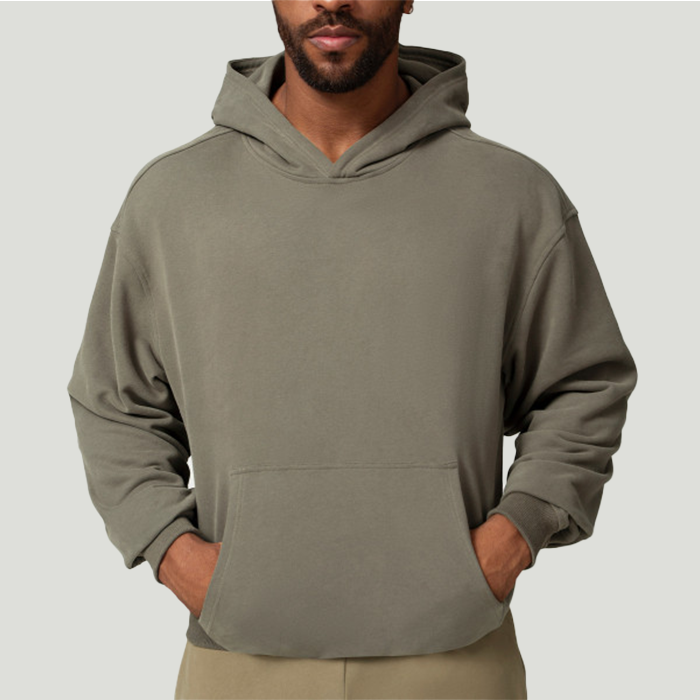
| Custom hoodies | Around 300 pieces per design | Fabric weight, ribbing, zipper and embroidery |
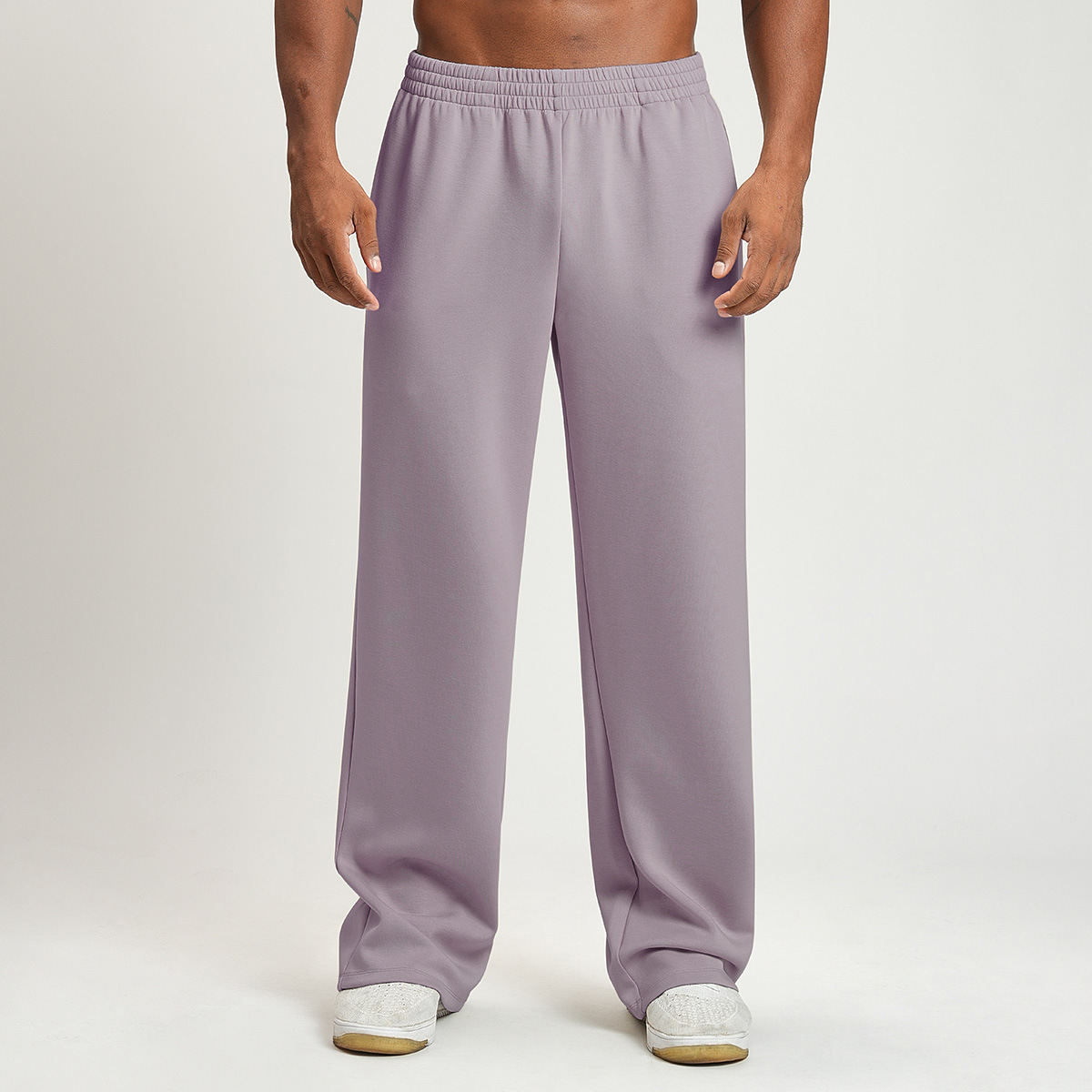
| Custom joggers | Around 300 pieces per design | Fabric, cuffs, pockets and trims |
| Existing private label styles | Project dependent | Available fabric, stock and customization level |
These numbers are not universal rules.
A basic T-shirt made from available fabric is usually easier to produce than a 2-in-1 training short with compression lining, zip pockets, custom elastic and laser-cut ventilation.
The most accurate way to confirm MOQ is to send the manufacturer a clear product brief, reference images or a complete tech pack.
What Does MOQ Mean in Activewear Manufacturing?
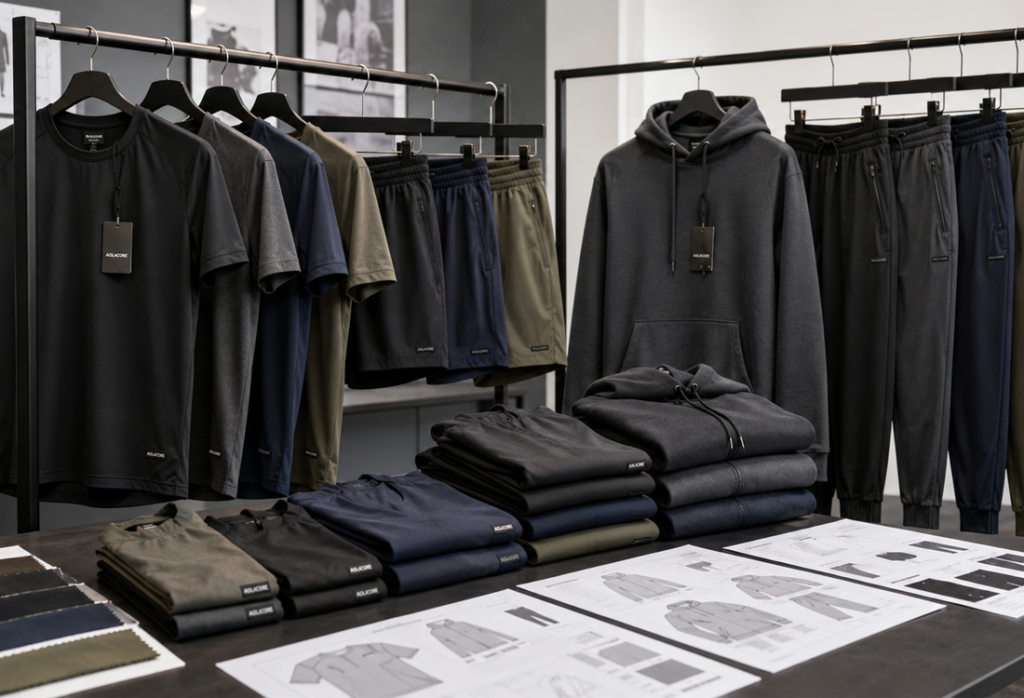
MOQ is the smallest quantity a manufacturer can produce efficiently for a specific design, fabric or color.
Custom activewear production includes several setup costs before bulk sewing begins. These may include:
- Pattern development and size grading
- Sample production and fitting
- Fabric purchasing or custom dyeing
- Cutting preparation
- Logo printing or embroidery setup
- Custom labels and trims
- Packaging preparation
- Production-line setup
- Quality inspection
These costs exist whether a factory produces 80 pieces or 800 pieces. When an order is too small, the setup cost must be divided across fewer garments, increasing the cost per unit.
That is why the lowest MOQ is not always the best choice.
A suitable MOQ should balance production efficiency, total investment and realistic sales demand.
MOQ per Design, Color and Size
One common misunderstanding is that an MOQ of 300 pieces means 300 pieces in every color or size.
In many cut-and-sew projects, MOQ is calculated per design, while colors and sizes can be divided within the total quantity.
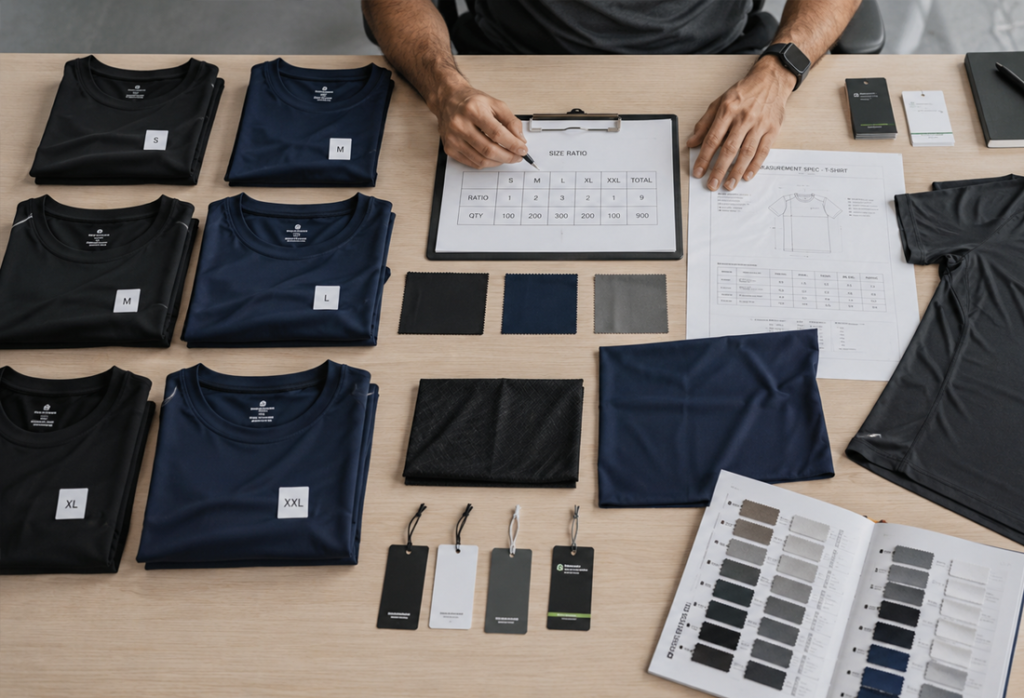
For example, a brand may order 300 pieces of one performance T-shirt:
- Black:150 pieces
- Navy: 150 pieces
- Sizes: S, M, L, XL and XXL
The ideal ratio depends on the target market and customer profile. Brands selling in the United States may need a different size mix from brands selling in Europe or Asia.
Before confirming an order, ask whether the MOQ applies to:
- The complete design
- Each individual color
- Each fabric
- Each size
- Each logo application
- The complete purchase order
This helps avoid unexpected quantity changes during quotation.
Men’s Performance T-Shirt MOQ
Performance T-shirts are often the easiest starting product for a new men’s activewear brand.
Compared with hoodies or multi-layer shorts, a standard training T-shirt normally has fewer pattern pieces, trims and sewing operations. However, technical details can still increase MOQ.
Fabric Selection
Using an available polyester-spandex, nylon-spandex or cotton-blend fabric is usually more flexible than developing a completely new material.
Custom fabrics may require a specific:
- Yarn composition
- Fabric GSM
- Knit structure
- Moisture-wicking finish
- Cooling or antibacterial treatment
- Pantone color
In many cases, the fabric mill—not the sewing factory—creates the real minimum quantity.
Custom Colors
Black, white, grey and navy are often easier to source.
A unique Pantone color normally requires fabric dyeing, and the minimum dye lot may produce enough fabric for several hundred garments.
Using fewer colors can therefore reduce both inventory risk and development complexity.
Fit and Construction
A standard athletic fit is easier to develop than a completely new oversized, muscle-fit or compression silhouette.
Custom patterns require sample fitting, measurement corrections and size grading. Additional panels, mesh inserts, bonded seams or curved hems also increase production steps.
Logo Application
A small heat-transfer logo is usually more flexible than all-over printing, large embroidery, multiple reflective logos or silicone badges.
Recommended First-Order Strategy
For a new brand, one strong T-shirt design in two commercial colors is usually more practical than several similar designs.
A balanced first order may include:
- One proven performance fabric
- One athletic fit
- Black and navy colorways
- Five sizes
- One logo position
This creates enough customer choice while keeping sourcing and production manageable.
What Usually Creates the Real MOQ?
The sewing factory does not always control the final minimum. MOQ can come from several parts of the supply chain.
Fabric MOQ
Custom-knitted or custom-dyed fabric often creates the largest minimum.
When the fabric mill requires a full dye lot, the garment quantity must use enough of that fabric to make the order economical.
Color MOQ
Every color requires separate dyeing, cutting and production management.
Adding more colors divides the same quantity into smaller batches, reducing production efficiency.
Trim MOQ
Custom zippers, elastic, drawcords, silicone badges, woven labels and packaging may each have their own minimum.
Printing and Embroidery MOQ
Screen printing requires screens and color setup. Embroidery requires digitization and machine setup.
Small quantities may be possible, but the setup cost per garment will be higher.
Packaging MOQ
Custom printed boxes, polybags and mailers may require larger quantities than the garment order.
Brands should confirm packaging minimums separately.
Understanding which component creates the MOQ allows the brand to simplify the correct part of the product instead of only asking the factory to reduce the final number.
Why the Same MOQ Does Not Mean the Same Cost
Two products may both have an MOQ of 300 pieces but very different prices.
Three hundred basic performance T-shirts and three hundred heavyweight zip hoodies involve different fabric consumption, garment weight, sewing time and trim requirements.
Unit cost is influenced by:
- Fabric price and consumption
- Garment weight
- Number of pattern pieces
- Sewing complexity
- Printing or embroidery
- Custom trims
- Packaging
- Quality-control requirements
- Total order quantity
When comparing manufacturers, request a detailed quotation.
It should clearly state:
- Fabric composition and GSM
- Sample cost
- MOQ
- Unit price
- Logo method
- Labels and packaging
- Production lead time
- Shipping terms
A low unit price may exclude important items. Comparing complete specifications is more useful than comparing one number.
How Startups Can Reduce MOQ Risk
The goal should not be finding the lowest possible MOQ.
The better goal is creating a focused first order that can test demand without spreading the budget across too many products.
Start With Fewer Core Products
A practical first men’s collection could include:
- One performance T-shirt
- One training short
- One hoodie
- One jogger
These four categories can form a complete training and athleisure range.
Use Shared Fabrics
Use the same performance fabric across related tops or the same French terry fabric for hoodies and joggers.
Shared fabrics simplify sourcing, color matching and future reorders.
Limit the Number of Colors
Two strong commercial colors are usually easier to manage than five colors with insufficient inventory in every size.
Black, navy, charcoal and muted earth tones are versatile choices for men’s activewear.
Use Standard Trims
Standard zippers, drawcords, elastic and labels can reduce complexity.
Custom hardware can be introduced after the product has demonstrated sales potential.
Approve Samples Before Bulk Production
A lower MOQ should never be used as a reason to skip sampling.
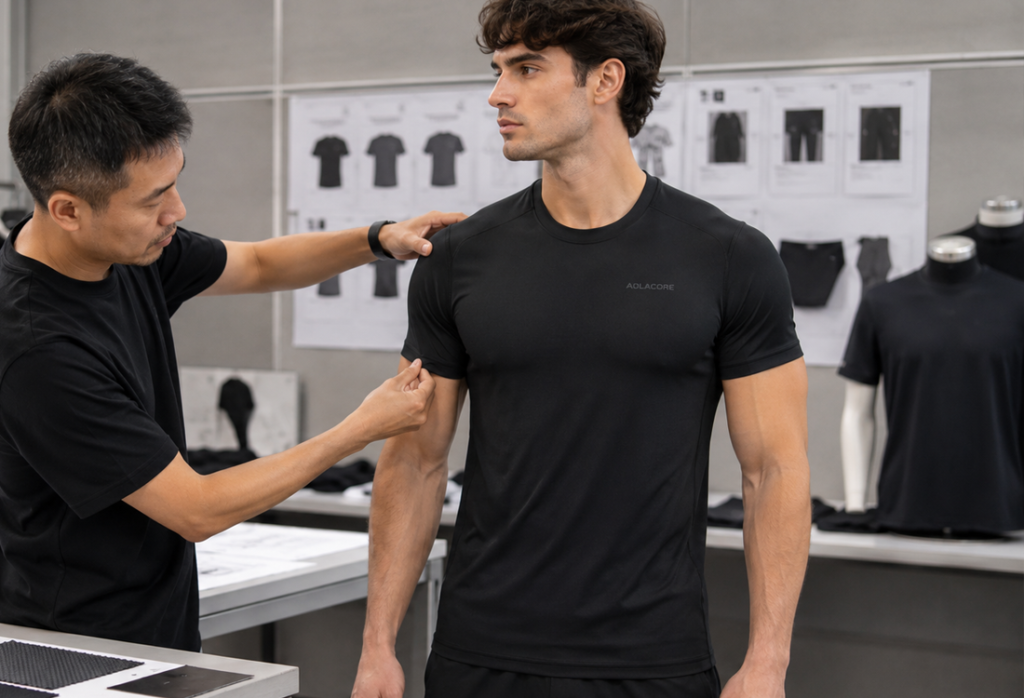
A proper sample helps the brand check:
- Fabric hand feel
- Fit and measurements
- Stretch and recovery
- Logo quality
- Stitching
- Pocket function
- Color accuracy
- Overall product positioning
Producing 300 approved garments is safer than producing a smaller quantity based on an untested design.
Plan Reorders Early
Ask the manufacturer to preserve:
- Patterns
- Measurement charts
- Fabric references
- Color standards
- Logo files
- Trim specifications
Complete production records improve consistency when a brand reorders successful products.
Questions to Ask a Men’s Activewear Manufacturer
Before placing an order, ask:
- Is MOQ calculated per design or per color?
- Can sizes be mixed within the MOQ?
- How many colors can be included?
- Does custom fabric require a separate minimum?
- Can available fabric reduce the MOQ?
- Are labels and packaging included?
- Does each logo position affect MOQ?
- Can hoodies and joggers share the same fabric order?
- What is the sampling process?
- How are measurements and quality checked?
- Can the same product be reordered later?
- How is color consistency controlled?
A professional manufacturer should explain why a minimum is required and offer practical alternatives when the original design creates unnecessary complexity.
How AOLACORE Supports Men’s Activewear Brands
AOLACORE focuses on custom men’s activewear manufacturing for fitness brands, private label businesses, distributors and wholesalers.
Its development scope covers men’s performance T-shirts, gym shorts, hoodies, joggers, tracksuits and other training apparel.
Instead of treating MOQ as an isolated number, the AOLACORE team evaluates the complete product, including:
- Fabric composition
- Fabric GSM
- Fit and sizing
- Garment construction
- Color quantity
- Logo technique
- Labels and packaging
- Expected order volume
AOLACORE supports OEM and ODM services, including:
- Fabric sourcing and development
- Pattern and fit adjustment
- Sample production
- Private label customization
- Bulk manufacturing
- Quality inspection
- Custom packaging
This experience is especially valuable in men’s activewear.
Performance T-shirts require controlled fit, breathability and moisture management. Training shorts need freedom of movement, secure waistbands and practical pocket construction. Hoodies and joggers depend on fabric stability, recovery, shape retention and consistent measurements.
By working with a manufacturer that understands these differences, brands can make better decisions about which features to keep, which details to simplify and how to plan a scalable first production run.
AOLACORE’s men’s activewear expertise, structured sampling process and production support help customers move from product ideas to market-ready collections with greater confidence.
Ready to Discuss Your Men’s Activewear MOQ?
Our team will evaluate your project and recommend a suitable sampling and production plan.
Are you looking for reliable manufacturers of clothing products?
We can quickly provide customers with market analysis, technical support and customized services.