
How Premium Activewear Builds a Stronger Fitness Brand
How Premium Activewear Builds a Stronger Fitness Brand
A strong fitness brand may be recognized by its logo, colors, packaging, and social media style, but these elements are not the main reason customers continue buying.
The real strength of a fitness apparel brand is built through the product itself. When customers wear a training T-shirt, shorts, joggers, hoodie, or compression garment, they judge the fabric, fit, comfort, construction, and performance. They may not know the technical terms, but they can feel whether the product is premium.
A logo creates recognition. A strong product creates trust.
Successful activewear branding therefore requires reliable quality, consistent sizing, comfortable fabrics, functional design, and stable production. Together, these elements turn premium activewear into a repeatable brand experience.
A Logo Attracts Attention, but the Product Defines the Brand
Many new brands invest heavily in logo design, packaging, photography, influencers, and advertising. These activities can generate interest and bring customers to the first purchase.
But marketing cannot permanently compensate for a weak product.
If the fabric feels cheap, the fit is uncomfortable, the color fades, the seams twist, or the size changes between orders, customers quickly lose confidence. Even a visually attractive fitness apparel brand will struggle to build loyalty if its products do not meet expectations.
On the other hand, when a product feels comfortable, performs well, fits consistently, and remains reliable after repeated washing, customers begin to associate those qualities with the brand.
They may describe the product as:
- Soft but supportive
- Lightweight without feeling thin
- Flexible without losing shape
- Comfortable during long workouts
- Well made and durable
- Consistent with previous purchases
These impressions become part of the brand identity.
In other words, activewear branding is not only what customers see. It is what they repeatedly experience.
1. Fabric Experience Creates the First Impression
Before a customer tests a product in the gym, the fabric has already started shaping the brand experience.
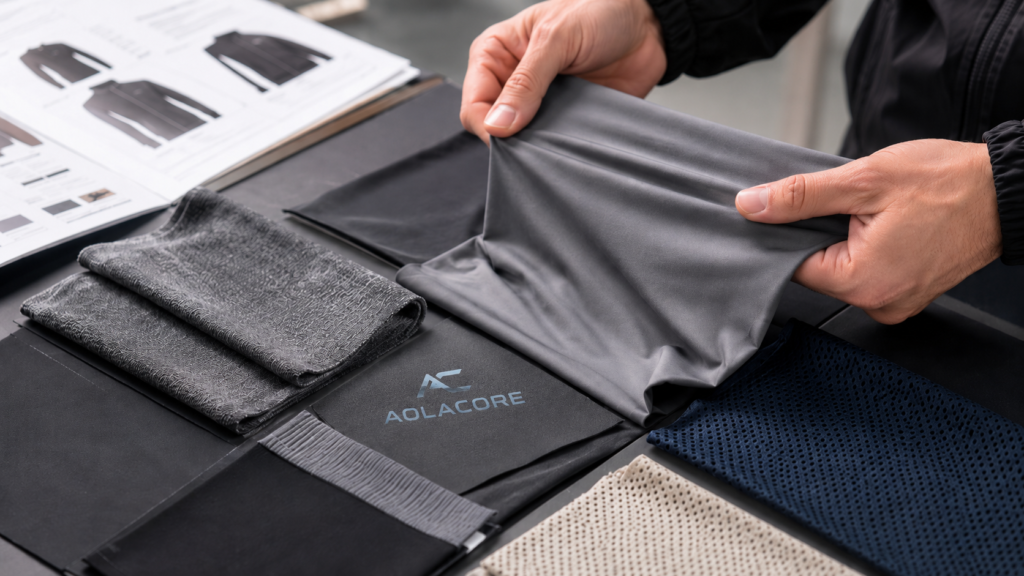
The first touch can immediately communicate whether the garment feels basic, technical, soft, structured, lightweight, compressive, breathable, or premium. This moment matters because customers often connect fabric quality directly with product value.
Premium activewear fabric should be selected according to the product’s function, target customer, price positioning, and intended wearing environment. A fabric that works well for a lightweight running T-shirt may not be suitable for structured joggers or compression shorts.
Important fabric factors include:
Hand Feel
Hand feel is the first physical signal of quality. A smooth, soft, and refined surface can make a garment feel more premium before it is even worn.
However, softness should not be the only goal. The fabric must still provide the correct structure, support, durability, and performance for the product category.
Stretch and Recovery
Stretch allows the garment to move with the body. Recovery determines whether the fabric returns to its original shape after movement.
Poor recovery can cause knees, elbows, waistbands, and seat areas to become loose or distorted. For a fitness apparel brand, this quickly reduces the perceived quality of the product.
Breathability and Moisture Management
Customers expect training apparel to remain comfortable during movement and sweating. Breathability, moisture-wicking performance, and drying speed all influence whether a garment feels suitable for real exercise.
Fabric Weight and Structure
GSM and fabric construction affect opacity, drape, compression, warmth, and durability. Lightweight fabric may be ideal for running tops, while heavier fabric may create a more structured appearance for hoodies, joggers, or premium athleisure pieces.
Color and Surface Stability
Premium fabrics should maintain a consistent surface and color after washing and repeated wear. Pilling, fading, shine marks, and uneven dyeing can weaken the customer’s trust in the product.
The right fabric does not simply improve one garment. It establishes a quality standard that customers begin to associate with the entire brand.
2. Wearing Experience Turns Quality into Brand Trust
Fabric quality creates the first impression, but the complete wearing experience determines whether the customer wants to use the product again.
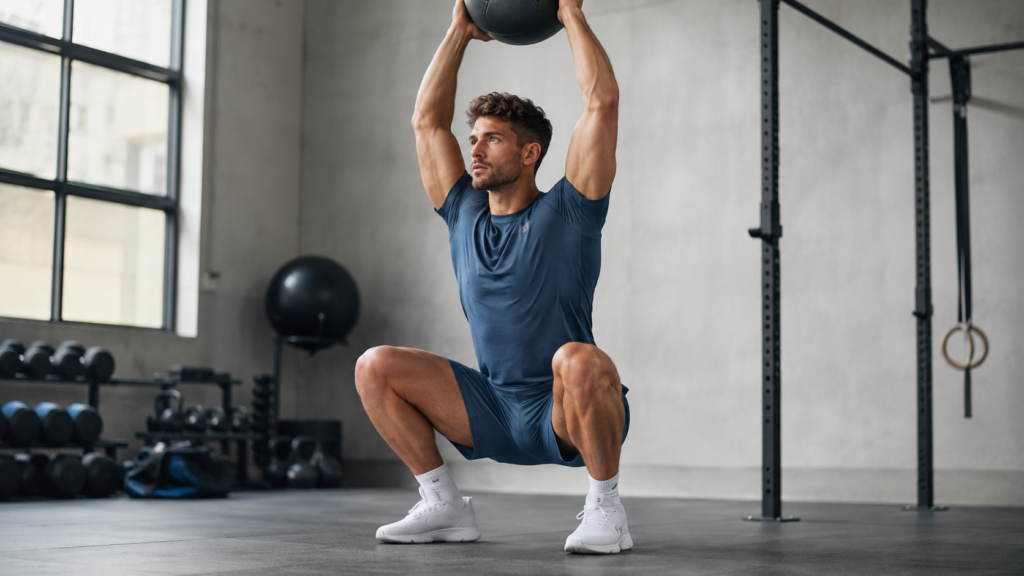
Customers judge activewear through movement. They notice whether the shoulders feel restricted, whether the waistband rolls, whether the shorts ride up, whether the seams cause friction, and whether the garment maintains its shape throughout a workout.
A premium wearing experience depends on several connected elements.
Fit Must Match the Customer and the Activity
The ideal fit is not the same for every product.
A gym T-shirt may require room across the shoulders and chest while maintaining a clean shape around the waist. Training shorts need enough space for squats, lunges, and running without looking oversized. Joggers should balance comfort, mobility, and structure.
Good fit is created through pattern development, measurement control, fabric behavior, and repeated fitting—not only by changing a size chart.
Construction Should Support Movement
Seam placement, stitch type, reinforcement, and panel design influence comfort and durability.
For high-movement garments, seams should avoid unnecessary friction. Stress points may require reinforcement. Waistbands, cuffs, necklines, and pocket openings must retain their shape after repeated use.
Customers may never study these construction details, but they feel the result every time they wear the garment.
Comfort Must Continue Beyond the First Try-On
A product can feel good for a few minutes in a fitting room but become uncomfortable during a full workout.
True premium activewear should remain comfortable while the customer moves, sweats, stretches, sits, travels, and washes the garment. This longer wearing experience is what separates a product that looks good online from one that becomes part of the customer’s regular routine.
When a customer repeatedly chooses the same T-shirt, shorts, or hoodie from their wardrobe, the product is building brand trust through daily use.
3. Consistency Is One of the Most Powerful Forms of Activewear Branding
A customer does not evaluate a brand from only one product. They compare every new purchase with their previous experience.
If a customer buys a medium T-shirt today and orders another medium three months later, they expect a similar fit. If they reorder the same shorts in another color, they expect the fabric, waistband, length, and construction to feel familiar.
This is where consistency becomes a major part of activewear branding.
Brand consistency includes:
- Stable sizing across production batches
- Similar hand feel across repeat orders
- Controlled color matching
- Reliable logo placement
- Consistent stitching and finishing
- Repeatable garment measurements
- Similar performance after washing
- Coordinated quality across different product categories
Inconsistent production creates confusion.
One batch may feel excellent while the next feels thinner, tighter, looser, rougher, or less durable. Even when the visual design looks the same, customers can feel the difference.
For a growing fitness apparel brand, this is especially risky. Marketing may successfully increase order volume, but unstable product quality can cause returns, complaints, negative reviews, and a loss of repeat customers.
Consistency also affects the overall collection.
A premium activewear brand should feel connected across its T-shirts, tank tops, shorts, joggers, hoodies, jackets, and compression pieces. The products do not need to use exactly the same fabric, but they should share a recognizable level of quality, fit logic, color direction, and finishing.
This creates a clear brand promise: no matter which product the customer chooses, they know what level of experience to expect.
4. Product Quality Protects Brand Positioning
Premium pricing requires premium proof.
Customers may initially accept a higher price because of strong photography, attractive packaging, or effective marketing. But after receiving the product, they decide whether the price was justified.
Product quality is what confirms that value.
For premium activewear, quality includes more than the absence of obvious defects. It includes the accuracy and refinement of every detail:
- Clean and balanced stitching
- Smooth seams and secure stress points
- Accurate garment measurements
- Stable shape after washing
- Correct fabric weight and performance
- Even color and surface appearance
- Durable prints, embroidery, and logo applications
- Functional pockets, zippers, drawcords, and trims
- Neat finishing inside and outside the garment
When these details are controlled, customers feel that the brand is professional and dependable.
When they are not controlled, the brand may be forced to rely on discounts to maintain sales. This can gradually weaken premium positioning.
Quality also influences online reputation. Customers frequently mention fit, fabric, comfort, and durability in reviews. These comments affect future buyers more strongly than many advertising messages because they describe the real product experience.
A well-made product gives customers evidence that the brand’s promises are true.
5. Premium Activewear Helps Reduce Returns and Complaints
Many returns begin with product development and manufacturing rather than customer service.
Unstable sizing, unexpected fabric feel, poor recovery, uncomfortable seams, color differences, shrinkage, fading, and weak construction can all turn a promising first order into a disappointing experience.
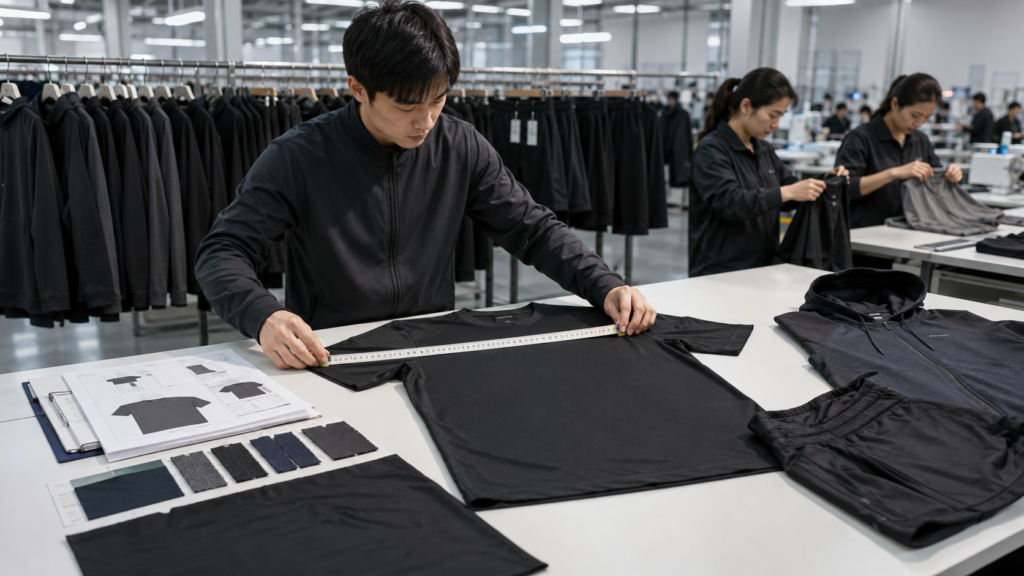
Clear size charts and accurate marketing help, but those promises are only reliable when bulk production follows the approved sample. Measurements, fabric, construction, color, and branding must remain within an agreed standard.
Better fabric selection, sample approval, measurement control, and production inspection can prevent avoidable problems before products reach customers.
This protects margins, online reviews, and the long-term relationship between the customer and the brand.
6. Customer Repurchase Is Built Through Familiarity and Confidence
Repeat purchases are one of the clearest signs that a product has successfully strengthened the brand.
A customer returns because the previous purchase reduced uncertainty. They already know how the fabric feels, how the size fits, how the garment performs, and how it looks after washing.
This confidence makes the second purchase easier than the first.
A customer may repurchase in several ways:
- Buying the same product in another color
- Replacing a frequently worn item
- Trying another category from the same collection
- Purchasing a new seasonal release
- Recommending the product to a friend
- Choosing the same brand instead of comparing alternatives
This behavior is especially valuable in activewear because customers often build wardrobes around reliable products.
Once they find a T-shirt, pair of shorts, joggers, or hoodie that works well, they tend to look for similar products from the same brand.
Premium activewear supports this behavior by creating a dependable experience.
The goal is not simply to make one impressive product. It is to create a product standard that can be repeated across future styles and production batches.
This is how product quality contributes to customer lifetime value. It transforms a first-time buyer into a returning customer and, eventually, a brand advocate.
7. Strong Products Make Marketing More Effective
Product quality and marketing should not be treated as separate strategies.
Marketing creates expectations. The product must fulfill them.
When a brand has a strong product, content creation becomes easier and more credible. The brand can show real fabric texture, movement, fit, construction, and performance rather than relying only on slogans.
Customer reviews also become more positive and specific. Instead of saying only that the product “looks good,” customers may mention the softness, compression, breathability, fit, durability, or comfort.
These details provide powerful social proof.
Strong products can also improve influencer and creator content. When a creator genuinely likes the fit and wearing experience, the recommendation appears more natural. The product becomes easier to demonstrate through training, styling, and everyday use.
In this way, premium activewear strengthens every part of activewear branding:
- Product photography looks more convincing
- Video content shows better fit and movement
- Customer reviews become more persuasive
- Influencer recommendations feel more authentic
- Paid advertising sends customers to a more reliable product
- Repeat customers reduce dependence on constant new-customer acquisition
The product becomes the foundation that allows marketing investment to produce longer-lasting results.
8. Building a Strong Fitness Apparel Brand Requires a Product System
Many brands focus on developing individual styles. However, long-term growth requires a repeatable product system.
A product system defines how the brand selects fabrics, develops fit, approves samples, controls measurements, manages colors, applies logos, checks quality, and handles repeat orders.
Without a clear system, every new style can become a separate experiment. This increases development time and makes consistency more difficult.
A stronger approach is to establish clear standards for the following areas.
Fabric Standards
Define acceptable fabric composition, weight, stretch, recovery, hand feel, colorfastness, pilling resistance, and performance for each product category.
Fit Standards
Create a consistent fit philosophy and size structure. Decide how T-shirts, shorts, joggers, hoodies, and compression items should relate to the target customer.
Construction Standards
Specify preferred seam types, reinforcement methods, stitch quality, trims, labels, logo applications, and finishing requirements.
Sample Approval Standards
Review samples for appearance, measurements, movement, comfort, fabric performance, and washing behavior before bulk production.
Bulk Quality Standards
Ensure production follows the approved sample and technical requirements. Check fabric, cutting, sewing, branding, measurements, finishing, and packing.
When these standards are documented and repeated, the fitness apparel brand becomes easier to scale without losing its original product identity.
How AOLACORE Helps Brands Build Stable Product Quality
A strong fitness brand needs more than a supplier that can place a logo on a garment.
It needs a manufacturing partner that understands how fabric, fit, construction, customization, and quality control work together.
AOLACORE supports activewear brands through a connected development and production process, including fabric sourcing and development, sample creation, logo and label customization, packaging, bulk manufacturing, and quality inspection.
Its manufacturing system also covers fabric performance adjustment, custom GSM and hand feel, size chart development, pre-production sample approval, in-process inspections, and final AQL-based checks.
Are you looking for reliable manufacturers of clothing products?
We can quickly provide customers with market analysis, technical support and customized services.