
Why Men's Compression Wear Is Becoming a Key Growth Category
Men’s activewear is no longer limited to basic T-shirts, loose gym shorts, hoodies, and joggers.
As customers become more familiar with technical sportswear, they are looking for products designed for specific activities, training environments, and performance preferences.
Compression wear is one of the categories benefiting from this change.
Compression shirts, tights, half tights, base layers, sleeves, and lined training shorts can now be used across strength training, running, football, cycling, functional fitness, outdoor sports, and post-workout routines.
This versatility gives fitness apparel brands an opportunity to expand beyond basic gymwear and build a more technical product range.
The wider activewear market is continuing to grow, while the men’s segment is projected to expand faster than the overall category in the coming years. Grand View Research estimates that the global activewear market will grow from USD 477.6 billion in 2026 to USD 920 billion by 2033, with the men’s segment forecast to grow at a 9.6% annual rate during that period.
Compression wear will not replace traditional activewear. However, it can become an important category for brands that want to offer more specialized products, create higher-value collections, and serve customers with clearer training needs.
What Is Men’s Compression Wear?
Men’s compression wear is made from highly elastic fabric designed to fit closely against the body.
Common product types include:
- Short-sleeve compression shirts
- Long-sleeve compression tops
- Compression tights
- Compression shorts
- Running half tights
- Compression sleeves
- Base-layer tops and bottoms
- Two-in-one shorts with compression liners
Most compression fabrics use nylon-spandex or polyester-spandex blends.
However, the composition alone does not determine how the product performs. Fabric weight, knitting structure, stretch percentage, recovery, surface finish, breathability, and pattern measurements all influence the final compression level.
A properly developed compression garment should feel close and supportive without unnecessarily restricting movement.
This balance is one of the main technical challenges in compression activewear development.
1. Men Are Buying More Activity-Specific Activewear
The growth of men’s compression wear is connected to a wider shift in activewear purchasing.
Customers are increasingly choosing different garments for different activities instead of using one basic outfit for every workout.
A runner may look for lightweight half tights with secure pockets. A strength-training customer may prefer a compression top that fits smoothly under a loose T-shirt. A football player may need a long-sleeve base layer for colder conditions.
This creates opportunities for brands to organize products around real use cases, including:
- Gym and strength training
- Running
- Functional fitness
- Football and team sports
- Cycling
- Outdoor training
- Cold-weather layering
- Recovery and travel
Compression products give brands a more technical category that can sit alongside traditional T-shirts, shorts, hoodies, and joggers.
Instead of selling only a general gym collection, the brand can develop specific solutions for training, running, layering, and recovery.
2. Compression Wear Works Across Multiple Training Categories
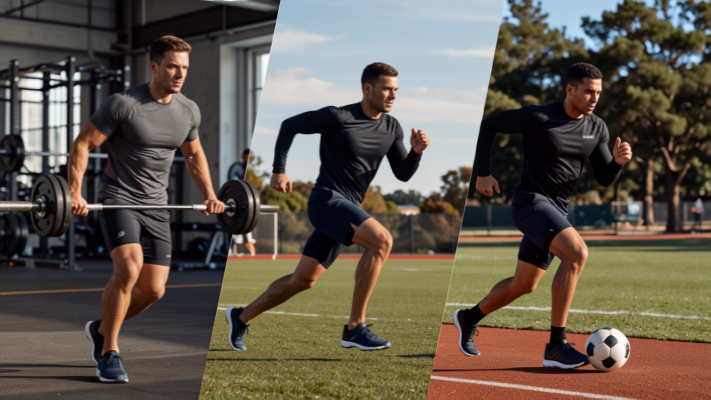
One reason compression wear has strong commercial potential is its ability to serve different sports and customer groups.
Strength Training
Compression shirts and shorts create a close fit that does not move as freely as oversized garments during bench presses, squats, deadlifts, and machine exercises.
Some customers wear compression pieces as the main training outfit. Others use them under loose T-shirts or shorts.
This allows brands to sell compression products both as standalone garments and as part of layered gym looks.
Running
Half tights and full-length compression tights have become recognizable running products.
Important features may include:
- Lightweight stretch fabric
- Secure phone pockets
- Moisture management
- Flat or low-friction seams
- Stable waistbands
- Reflective logo details
- Adjustable drawcords
The value is not created by compression alone. It comes from combining close fit with practical running functions.
Team Sports
Compression base layers are commonly worn under football, basketball, rugby, and other sports uniforms.
Long-sleeve tops and tights can provide an additional layer during outdoor training, while short-sleeve tops and shorts can be used beneath match or practice apparel.
This creates opportunities for fitness brands, sports clubs, teamwear suppliers, and private-label retailers.
Functional and Hybrid Fitness
Training formats that combine running, rowing, lifting, and bodyweight exercises require garments that can move across different activities.
Compression products can support this type of collection because they create a close silhouette and can be layered easily with shorts, vests, or lightweight outerwear.
3. Customers Value the Feeling of Support
Compression wear offers a different wearing experience from standard activewear.
The fabric sits close to the body and creates a controlled, secure feeling. For many customers, this is one of the main reasons for choosing compression apparel.
The experience depends heavily on fabric recovery.
Stretch allows the garment to expand during movement, while recovery enables it to return to its original shape.
A fabric that stretches but recovers poorly may become loose around the knees, elbows, waist, or seat. A fabric with excessive tension may feel restrictive and make the garment difficult to put on.
Successful compression products need to balance:
- Firmness
- Flexibility
- Recovery
- Breathability
- Softness
- Opacity
- Movement comfort
The ideal balance may also differ by product.
A running half tight may need lighter compression and better breathability. A strength-training top may use a denser material for structure and coverage. A recovery-focused product may prioritize all-day comfort.
Brands should therefore avoid using exactly the same fabric specification for every compression garment.
4. The Body-Contoured Look Has Strong Visual Appeal
Compression wear provides a clear and recognizable visual identity.
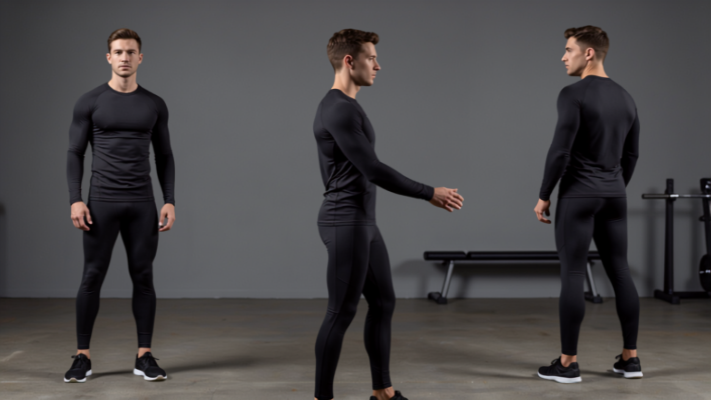
Its fitted silhouette highlights garment construction, ergonomic panels, muscle lines, seam placement, and fabric texture. This makes the category effective for product photography, fitness videos, training demonstrations, and social media content.
For men’s fitness brands, compression wear can communicate:
- Technical performance
- Training intensity
- Athletic identity
- Modern minimalism
- Body-conscious design
- Sport-specific functionality
This does not mean every compression product needs aggressive graphics or complicated paneling.
Minimalist compression wear in black, charcoal, navy, olive, or deep burgundy can create a premium appearance through fabric quality, fit, and subtle construction details.
Brands can also use contrast stitching, reflective logos, mesh ventilation, bonded pockets, or tonal panels to create differentiation without making the product visually excessive.
5. Compression Products Support Layered Collections
Compression wear does not need to exist as a separate collection.
It can act as the foundation of a larger men’s activewear range.
For example, a brand can combine:
- Compression tops with oversized gym T-shirts
- Compression shorts with lightweight outer shorts
- Base-layer tights with training joggers
- Long-sleeve compression tops with running jackets
- Half tights with breathable tanks
- Compression liners with two-in-one shorts
This creates more complete outfits and gives customers additional reasons to purchase several products together.
A brand launching a men’s gym collection could offer a fitted base layer, relaxed T-shirt, two-in-one short, hoodie, and jogger using coordinated colors.
The compression product adds technical value, while the looser pieces make the collection accessible to customers who do not want a completely fitted outfit.
Layering also extends seasonal use.
A short-sleeve compression shirt may be worn alone during indoor training or beneath another garment in cooler conditions. Long-sleeve base layers and tights can support autumn and winter training collections.
6. Compression Wear Can Support Premium Pricing
Customers often expect technical products to cost more than basic garments.
Compression wear usually requires more specialized fabric, accurate pattern development, controlled stitching, and detailed fitting. Functional additions such as phone pockets, ventilation zones, reflective elements, bonded hems, or anti-slip waistbands can add further value.
This can help brands create a clearer pricing structure.
A collection may include:
- Entry-level training T-shirts
- Mid-range gym shorts
- Premium compression tops
- Technical half tights
- High-value layered sets
The category can therefore raise the average order value when it is combined with other activewear products.
However, premium pricing must be supported by visible and wearable quality.
Customers will quickly notice if the fabric becomes transparent, the waistband rolls, seams cause discomfort, or the garment loses compression after washing.
The product needs to justify its price through fabric performance, fit, construction, and durability—not only through the word “compression” in the product name.
7. Compression Wear Encourages Repeat Purchases
Compression products can support repeat purchasing because customers often use them frequently and in rotation.
A customer who trains several times per week may need multiple compression shirts, tights, or shorts.
Once the customer finds a product with the right fit and compression level, they may purchase:
- Additional colors
- Short-sleeve and long-sleeve versions
- Shorts and full-length tights
- Different products for gym and running
- Replacement items after frequent use
- Matching outer layers
Fit consistency is critical to this opportunity.
A customer who buys a medium compression shirt expects the next medium to deliver a similar level of support. Unexpected changes in fabric, measurements, recovery, or seam construction can quickly reduce trust.
Brands should maintain clear fabric specifications, approved patterns, measurement tolerances, and production records across repeat orders.
8. Scientific Claims Need to Be Handled Carefully
Compression wear is frequently marketed using claims related to circulation, muscle support, performance, reduced fatigue, and recovery.
A 2025 systematic review and meta-analysis found that compression garments may help reduce declines in muscle strength and power after exercise-induced fatigue, suggesting potential value in some recovery situations.
However, an updated review of compression garments during running found no meaningful overall improvement in running performance. The researchers noted that garment design and study methods vary and that more rigorous research is needed.
For apparel brands, this means marketing should focus on benefits the customer can directly experience, such as:
- Close and secure fit
- Stretch and mobility
- Moisture management
- Layering comfort
- Reduced garment movement
- Practical pocket design
- Smooth construction
- Fabric recovery
9. Compression Wear Requires More Technical Development
Compression products may appear simple because they use fewer loose or structured components.
In practice, they require careful product development.
Fabric Selection
The material must provide sufficient stretch and recovery while remaining breathable, comfortable, durable, and opaque.
Nylon-spandex can offer a smooth and premium hand feel. Polyester-spandex may provide strong moisture-management potential, color stability, and cost flexibility.
The final decision should be based on the product rather than fiber composition alone.
Pattern and Negative Ease
Compression garments are generally smaller than the body measurements they are designed to fit. This difference is known as negative ease.
Too much negative ease can restrict movement and make sizing difficult. Too little can prevent the garment from delivering a compression feel.
The pattern must be developed according to the actual fabric’s stretch and recovery.
Seam Placement
Poor seam placement can create friction during running, lifting, or repeated movement.
Flatlock seams, low-profile seams, or carefully positioned overlock construction may help improve comfort, depending on the design and target cost.
Opacity
Compression bottoms must be tested during deep squats, bending, stretching, and bright lighting.
A fabric that appears opaque while relaxed may become transparent when stretched.
Waistband Stability
Compression shorts and tights need a waistband that remains stable without rolling, folding, or creating excessive pressure.
Size Grading
Compression levels should remain reasonably consistent across the size range.
Simply increasing every measurement by the same amount may cause smaller sizes to feel extremely tight and larger sizes to lose support.
How Brands Can Enter the Compression Wear Category
Brands do not need to launch a large compression collection immediately.
A focused entry can reduce risk and provide useful customer feedback.
A practical first range may include:
- A short-sleeve compression shirt
- A long-sleeve base layer
- Compression shorts or running half tights
- Two-in-one training shorts
Black and dark neutral colors can provide a strong starting point because they are easier to coordinate with existing collections.
After reviewing sales, size feedback, returns, and customer comments, the brand can expand into new colors, full-length tights, printed products, teamwear, or more specialized running pieces.
The first collection should establish a reliable fit and fabric standard rather than trying to include too many features.
How AOLACORE Supports Men’s Compression Wear Development
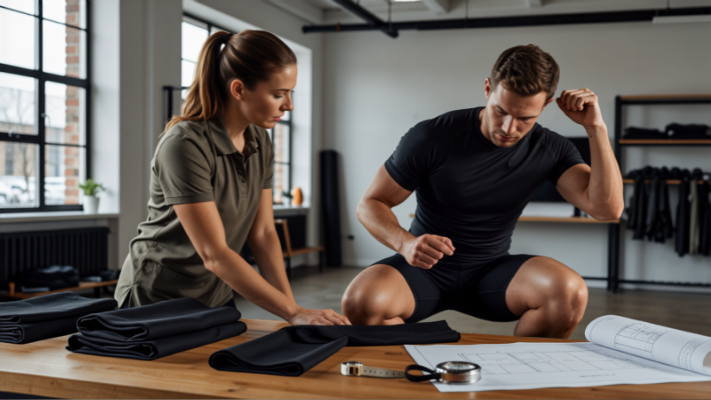
AOLACORE supports brands developing compression wear through fabric sourcing, fabric engineering, pattern development, sampling, private-label customization, bulk manufacturing, and multi-stage quality control.
Its manufacturing capabilities include nylon-spandex and moisture-management fabrics, compression and recovery materials, custom GSM and hand-feel adjustment, cut-and-sew production, seamless manufacturing, and compression sportswear production.
During development, AOLACORE can help brands confirm:
- Fabric weight and composition
- Stretch and recovery
- Compression level
- Garment measurements
- Seam placement
- Waistband construction
- Pocket position
- Logo application
- Size grading
- Fit during movement
Prototype and pre-production samples allow brands to evaluate fabric feel, fit, construction, compression, and branding before bulk manufacturing begins.
AOLACORE also supports private labels with fabric sourcing, logo customization, labels, packaging, size development, production, and quality inspection for men’s activewear products.
During bulk production, checks can include fabric inspection, measurement verification, stitching quality, elasticity, stretch recovery, logo position, and final packaging.
This structured process helps brands create compression products that are not only visually fitted but also comfortable, scalable, and consistent across repeat orders.
AOLACORE supports custom men’s compression shirts, shorts, tights, base layers, two-in-one training shorts, and other performance activewear products.
From fabric development and sample fitting to OEM/ODM production, private labeling, quality inspection, packaging, and repeat orders, AOLACORE helps brands turn compression-wear concepts into production-ready collections.
Are you looking for reliable manufacturers of clothing products?
We can quickly provide customers with market analysis, technical support and customized services.