
How Social Media Is Changing Activewear Product Development
Social media was once mainly used to promote activewear after a product had already been designed and manufactured.
Today, it influences the product much earlier.
TikTok videos, Instagram Reels, creator reviews, customer comments, workout content, product comparisons, and online communities can all affect which garments a fitness brand develops next.
Brands can now observe how customers wear activewear in real situations, which design details receive attention, what problems appear during movement, and which colors or silhouettes are beginning to gain interest.
TikTok describes this environment as discovery-led commerce, where creator content, search behavior, product discovery, and purchasing are increasingly connected. Meta has also reported that short-form video plays an important role in apparel discovery and purchase decisions in several of its market studies.
This does not mean every viral trend should become a new collection.
It means social media has become an additional source of product intelligence.
Successful fitness brands combine these signals with customer data, product testing, commercial planning, and professional manufacturing. The result is a more responsive activewear product development process without allowing short-term trends to completely control the brand.
1. Product Research Now Happens in Public
Traditional product research often relied on trade shows, retail visits, competitor analysis, trend reports, customer surveys, and internal sales data.
These sources remain valuable, but social media adds another layer.
Brands can observe public conversations around:
- Fabric feel
- Sizing problems
- Waistband construction
- Pocket placement
- Sweat visibility
- Product opacity
- Seam discomfort
- Fit preferences
- Color demand
- Styling combinations
- Workout-specific requirements
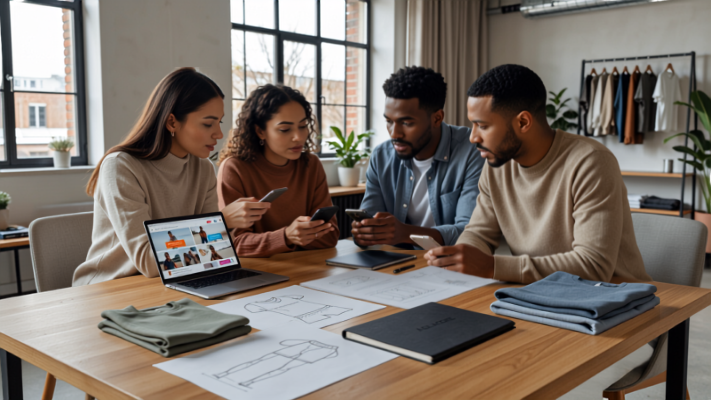
A product-development team does not always need to ask customers what they want in a formal survey.
Customers may already be discussing it in video comments, product reviews, creator comparisons, and gym-related communities.
A study examining thousands of TikTok and YouTube videos found that video-based social content can contain product ratings, feature requests, performance issues, usage experiences, and other information relevant to product requirements.
For an activewear brand, this creates an opportunity to understand the language customers naturally use.
A customer may not say that a pair of shorts requires improved pattern engineering. Instead, they may say:
- “The shorts ride up when I run.”
- “The pocket is too small for my phone.”
- “The waistband folds during squats.”
- “The shirt fits well in the chest but is too wide at the waist.”
- “The fabric looks different when it stretches.”
These comments can be translated into technical product-development questions.
Should the inseam be adjusted? Does the fabric need stronger recovery? Should the pocket opening be repositioned? Does the waistband require a different construction?
Social media does not replace technical development, but it can reveal where technical development should focus.
2. Short-Form Video Shows Products in Real Movement
Traditional product photographs are useful for showing color, silhouette, and styling.
However, activewear is designed for movement.
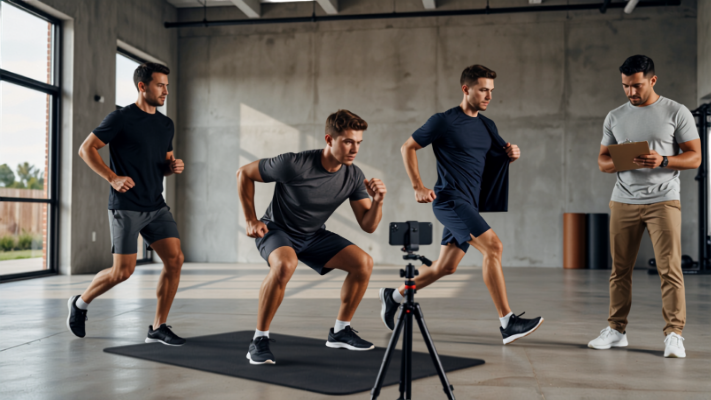
Short-form videos allow brands to observe how garments behave during:
- Squats
- Lunges
- Running
- Jumping
- Stretching
- Weight training
- Cycling
- Everyday walking
- Layering and outfit changes
This can reveal product issues that are difficult to see in a still image.
A T-shirt may look balanced while the model is standing but rise excessively when the arms are lifted. Shorts may appear comfortable until the customer performs a deep squat. A waistband may look stable in a product photograph but roll during repeated movement.
Creator videos can also reveal how customers actually style the product.
A compression top may be worn beneath an oversized T-shirt. Running half tights may be combined with loose outer shorts. A training hoodie may be used for commuting and travel rather than only for warming up in the gym.
These observations help brands understand the complete wearing environment.
That information can influence fabric selection, garment length, pocket design, layering compatibility, and collection planning.
3. Customer Comments Can Become Product Improvements
Social media feedback is especially useful after a product launch.
Instead of waiting until the next formal customer survey, brands can monitor recurring comments about the existing collection.
One isolated complaint may not require a redesign.
However, when the same issue appears repeatedly across comments, reviews, customer-service messages, and creator videos, it may indicate a genuine product-development opportunity.
For example, repeated feedback may suggest that customers want:
- A longer training T-shirt
- A shorter running inseam
- A more secure phone pocket
- A less restrictive neckline
- Stronger waistband support
- A heavier fabric
- Additional neutral colors
- A logo with less visibility
- A wider size range
- A more relaxed fit
Brands should organize this information rather than reacting emotionally to individual comments.
Feedback can be grouped into categories such as:
- Fit
- Fabric
- Function
- Construction
- Color
- Sizing
- Branding
- Price
- Packaging
The product team can then compare the frequency and commercial importance of each issue.
A recent example outside activewear involved a consumer brand cataloguing TikTok criticism and using recurring complaints as a roadmap for product redesign. The broader lesson is relevant to fitness apparel: negative feedback can become valuable development information when it is verified and translated into practical improvements.
4. Social Media Is Accelerating Trend Cycles
Social platforms can make a color, silhouette, styling method, or product feature highly visible in a short period.
One month, matching minimalist sets may dominate fitness content. Later, customers may shift toward oversized tops, layered outfits, vintage sportswear, contrasting colors, or movement-specific products.
McKinsey has noted that the number of fashion microtrends has expanded and that interest in trending styles can fluctuate dramatically within a relatively short period. Its 2026 fashion outlook also emphasizes that brands need greater agility as consumer behavior and technology continue changing rapidly.
This faster environment affects activewear development in two ways.
First, brands need to identify trends earlier.
Waiting until a style is visible everywhere may mean the market is already crowded by the time the product reaches production.
Second, brands need to distinguish between a temporary content trend and a lasting customer need.
A viral color may disappear quickly. A demand for better pockets, more comfortable waistbands, versatile layering, or inclusive sizing may remain valuable for several seasons.
Successful brands evaluate social trends through several questions:
- Does the trend suit our target customer?
- Does it match our brand identity?
- Is it functional or only visual?
- Can it be produced at the required quality?
- Will customers still want it when production is completed?
- Can the idea become part of a larger collection?
- Does sales or search data support the social attention?
Social media should inform product decisions, not make them automatically.
5. Brands Can Validate Ideas Before Bulk Production
Social media gives brands more ways to test product interest before committing to a large inventory.
A brand can present:
- Color options
- Early sketches
- Sample details
- Fabric textures
- Logo placements
- Fit variations
- Product names
- Styling combinations
Polls, waitlists, comment requests, creator previews, and limited sample releases can help identify which options attract the strongest response.
This does not provide a guaranteed sales forecast.
People may vote for a color without purchasing it. A video may receive high engagement because it is entertaining rather than because viewers want the product.
However, social feedback can still help brands narrow choices.
For example, instead of launching six untested colors, the brand may use audience responses alongside historical sales data to select three stronger options.
The same approach can be used for fit.
A brand considering both a fitted and relaxed training T-shirt could ask creators and selected customers to test both versions. Their comments can support the fitting process before the final pre-production sample is approved.
This creates a more informed development process while reducing unnecessary product variations.
7. Products Are Being Designed for Both Performance and Content
Social media has increased the importance of how garments appear in photographs and videos.
Details such as seam lines, color blocking, reflective logos, fabric texture, pocket construction, and layered silhouettes can help a product communicate its function visually.
This can be useful when the visual feature also improves the product.
For example:
- Ergonomic seams can support movement and create a technical appearance.
- A functional phone pocket can become an easy video demonstration.
- Four-way-stretch fabric can be shown through movement content.
- A stable waistband can be demonstrated during squat testing.
- Reflective details can be shown in low-light running content.
The risk is designing only for the camera.
A dramatic seam may look attractive but create discomfort. An oversized pocket may gain attention but distort the garment. A trendy fabric may perform poorly during exercise.
Strong activewear development connects visual communication with real functionality.
The product should look convincing in content because it works well—not because design details were added only to create a marketing claim.
8. Viral Demand Creates Inventory Risks
A viral post can create sudden interest in one product, color, or size.
This may lead brands to increase production quickly.
However, online attention can disappear as quickly as it appears.
If a brand produces a large quantity based on one successful video, it may be left with excess inventory after the trend moves on.
The opposite problem is also possible.
A brand may underestimate demand, sell out quickly, and then wait several months for a restock. By the time the new production arrives, customers may have moved to another product.
Brands need to combine social signals with:
- Actual conversion rates
- Sales by size and color
- Return rates
- Waitlist registrations
- Inventory levels
- Advertising performance
- Repeat-purchase data
- Production lead times
Core products and trend-driven products should also be managed differently.
A reliable black training T-shirt may support larger repeat orders. A viral seasonal color may require a smaller initial quantity and faster review.
The goal is to respond to demand without allowing short-term attention to create long-term inventory problems.
9. Manufacturers Need More Flexible Development Systems
As social media shortens trend and launch cycles, brands increasingly need manufacturing partners that can move efficiently from insight to sample and from approved sample to production.
Speed is valuable, but uncontrolled speed creates quality risk.
A responsive development process still needs to include:
- Clear design requirements
- Fabric evaluation
- Pattern development
- Sample fitting
- Movement testing
- Logo approval
- Size confirmation
- Pre-production approval
- Quality control
The solution is not to remove these stages.
It is to organize them more effectively.
Brands can prepare clearer tech packs, consolidate sample comments, select fabrics earlier, and separate essential product decisions from optional details.
Manufacturers can help by evaluating production feasibility early, maintaining clear sample records, and identifying which trend-led changes can be completed without weakening fit or quality.
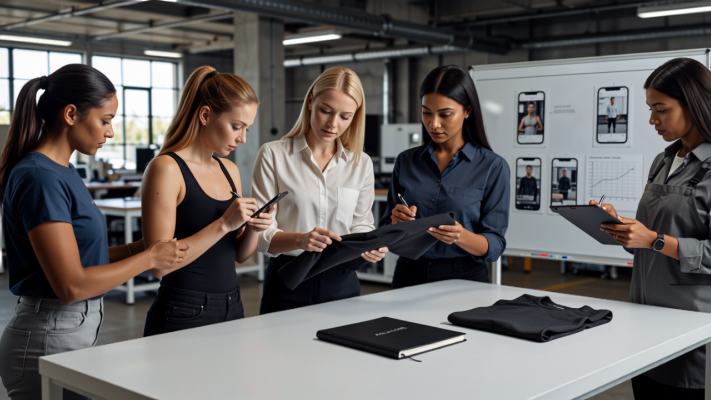
Social media can reveal what customers are discussing, but those insights still need to be converted into commercially viable garments.
AOLACORE supports brands through a structured product-development process that connects market direction with fabric selection, pattern making, sampling, fitting, manufacturing, and quality control.
Its ODM system is designed to transform market insights into product concepts and production-ready sportswear, while its design team works with pattern, fabric, sample, and category-planning specialists.
Brands can begin with:
- A social-media trend reference
- A competitor product
- A creator recommendation
- Customer feedback
- A design sketch
- A tech pack
- An existing sample
The AOLACORE team can then help evaluate whether the idea is suitable for the target product and production method.
This may include confirming:
- Fabric composition and GSM
- Stretch and recovery
- Fit and silhouette
- Pattern measurements
- Seam construction
- Pocket functionality
- Logo application
- Color direction
- Size grading
- Production feasibility
Samples allow the brand to test whether an online idea works as a physical garment.
Fit, movement, fabric behavior, construction, and workmanship can be reviewed before bulk production. AOLACORE’s custom-development process includes design and tech-pack review, fabric selection, sampling, fit confirmation, bulk manufacturing, and quality inspection.
This helps brands respond to social-media opportunities without skipping the technical work required to create a stable product.
Final Thoughts
Social media is changing activewear product development by bringing brands closer to real customer behavior.
It helps brands identify emerging colors, silhouettes, activities, styling methods, functional demands, and product problems.
Short-form video also shows how garments perform during movement, while creator content and customer comments can reveal issues that traditional product photography may miss.
However, social attention is not the same as proven demand.
Viral trends can be temporary, audience comments can conflict, and highly engaging content does not always produce sales.
The strongest fitness brands use social media as one source of information within a larger product-development system.
They combine online insights with sales data, brand positioning, fabric testing, sample fitting, manufacturing feasibility, and quality control.
Social media may help identify the opportunity.
Professional product development determines whether that opportunity can become a product customers will continue wearing after the trend has passed.
Turn Social Media Insights into Production-Ready Activewear
AOLACORE supports men’s activewear brands with market-oriented design development, fabric sourcing, pattern making, customized sampling, OEM/ODM production, private labeling, quality control, packaging, and repeat-order manufacturing.
Whether your next product idea comes from customer comments, creator feedback, an emerging training trend, or an existing design concept, AOLACORE can help evaluate and transform it into a scalable activewear product.
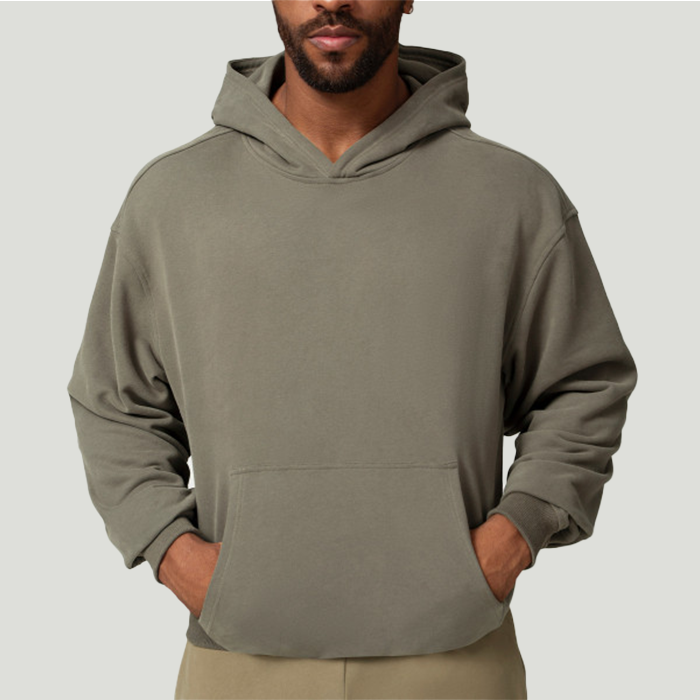
Are you looking for reliable manufacturers of clothing products?
We can quickly provide customers with market analysis, technical support and customized services.