
The Hidden Costs of Poor Sample Development
The Hidden Costs of Poor Sample Development
For many activewear brands, sample development can feel like a small step between design and bulk production.
A brand sends a sketch, reference garment, or tech pack to a manufacturer. The factory produces a sample, the brand reviews it, and production begins once the product appears acceptable.
In reality, sampling is not simply about creating one garment before making hundreds more.
It is the stage where the brand and manufacturer confirm whether the product can be produced accurately, consistently, and at scale.
The fabric, fit, measurements, stitching, logo application, trims, colors, and construction methods should all be tested before bulk production begins. When this process is rushed or poorly managed, the visible sample cost may be low, but the hidden costs can become significant.
Poor sample development can result in repeated revisions, expensive courier shipments, production delays, incorrect materials, inconsistent sizing, bulk manufacturing problems, product returns, and damage to customer trust.
The most expensive sample is not always the one with the highest sample fee.
It is often the sample that fails to identify a problem before mass production.
Why Sample Development Matters in Activewear?
Activewear must do more than look good on a table or mannequin.
It must perform while the customer runs, stretches, lifts, squats, travels, and moves through daily life. The garment must also maintain its fit, appearance, and comfort after repeated wear and washing.
This makes activewear sample development more complex than simply copying a visual design.
A successful sample must bring several technical elements together:
- Fabric performance
- Pattern accuracy
- Garment measurements
- Body movement
- Stitch construction
- Stretch and recovery
- Logo placement
- Trims and accessories
- Size grading
- Production feasibility
A training T-shirt may look simple, but small changes in shoulder width, sleeve angle, body length, fabric weight, or neckline construction can affect the entire wearing experience.
Training shorts must provide enough room for movement without becoming too loose. Joggers need a stable waistband, suitable thigh space, correct tapering, and fabric that maintains its structure. Compression products require careful control of stretch, recovery, and negative ease.
A sample is where these decisions become physical.
It allows the brand to test whether the original idea works as a real product—not only as a drawing.
1. The Cost of Choosing the Wrong Fabric
One of the most common hidden costs begins with fabric selection.
A fabric may look suitable in a photograph or appear close to a reference garment, but composition alone does not determine performance.
Two fabrics with similar nylon-spandex or polyester-spandex compositions can have very different characteristics because of differences in yarn, knitting structure, weight, finishing, dyeing, stretch, and recovery.
If the fabric is not properly evaluated during sampling, the finished product may be:
- Too thin or too heavy
- More transparent than expected
- Too warm for intense training
- Too soft to maintain structure
- Too stiff for comfortable movement
- Slow to dry
- Poor at recovering after stretching
- Prone to pilling or surface damage
- Different from the brand’s price positioning
Changing the fabric after the first sample can require a new pattern adjustment because different materials behave differently during cutting, sewing, and wearing.
A heavier fabric may reduce stretch. A lighter fabric may require changes to seam construction. A fabric with stronger recovery may create a tighter fit even when the garment measurements remain unchanged.
The cost therefore extends beyond ordering another fabric swatch.
It may include another sample, another fitting session, new logo testing, additional shipping, and a revised production schedule.
If the wrong fabric is approved and enters bulk production, the consequences become much more serious. The brand may receive hundreds of garments that do not provide the intended comfort, performance, or premium feel.
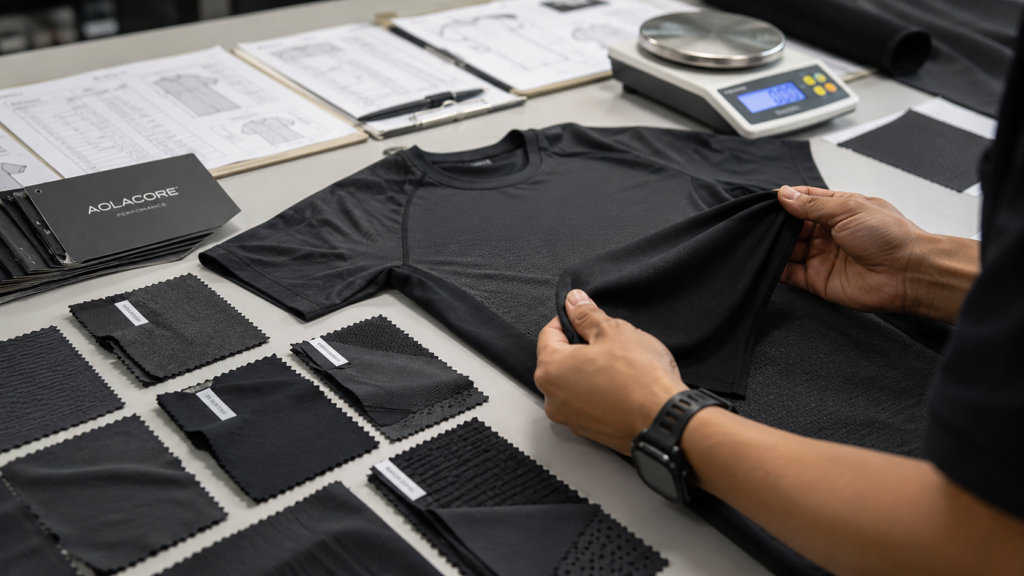
A proper sampling process should confirm fabric weight, hand feel, stretch, recovery, opacity, surface quality, and suitability for the product’s intended use.
2. Repeated Sample Revisions Increase More Than Development Costs
It is normal for a customized product to require revisions.
The problem begins when revisions are caused by incomplete information, inaccurate measurements, unclear communication, or failure to confirm details before the sample is made.
For example, a brand may approve a general design but fail to define:
- Exact garment measurements
- Acceptable measurement tolerances
- Fabric composition and GSM
- Stitching requirements
- Logo dimensions
- Logo placement
- Pocket measurements
- Drawcord construction
- Label position
- Packaging details
The first sample arrives, and the brand discovers that the body is too wide, the sleeve is too short, the fabric is too light, and the logo is positioned incorrectly.
The manufacturer creates a second sample, but the brand changes the fit direction at the same time. The second version solves one problem but creates another.
After several rounds, the sample fee is no longer the main expense.
The brand has also spent time reviewing products, organizing fitting sessions, preparing comments, communicating with the supplier, waiting for revisions, and paying for repeated international shipments.
For a small brand, the founder may be handling this work personally. For a larger company, the process may involve designers, product developers, buyers, technical teams, and managers.
Every unnecessary sample round consumes internal working hours.
A structured approval process reduces this waste.
Comments should be clear, measurable, and consolidated. Instead of writing “make the fit better,” the brand should identify exactly which measurement or shape needs to change.
Photographs, measurement diagrams, marked-up tech packs, and fitting notes can help the sample team understand the required correction.
The goal is not to eliminate all revisions. It is to make every revision purposeful.
3. Poor Samples Can Delay the Entire Product Launch
Sample delays do not remain inside the development department.
They affect every stage that follows.
Bulk fabric cannot always be ordered until the material is approved. Final patterns cannot be graded until the fit is confirmed. Packaging cannot be completed until product specifications are stable. Photography, influencer seeding, wholesale presentations, and advertising may also depend on the finished sample.
When sample development takes longer than expected, the launch calendar begins to move.
A delayed sample may lead to:
- Late bulk production
- Missed campaign dates
- Delayed product photography
- Postponed website launches
- Missed wholesale appointments
- Late influencer deliveries
- Increased freight costs
- Reduced selling time for seasonal products
The brand may originally plan to ship by sea but later choose air freight because production finished too close to the launch date.
The additional freight cost may be far greater than the cost of developing the sample correctly at the beginning.
Seasonal timing creates even more pressure.
A fleece hoodie that arrives after the cold-weather selling period or a lightweight running collection that launches after the planned campaign may have less time to generate full-price sales.
This can force the brand to discount products earlier than expected.
Poor sample development therefore creates a cost that may not appear on the factory invoice: lost market opportunity.
4. A Sample That Looks Good May Still Be Difficult to Produce
A sample can appear attractive while still being unsuitable for stable bulk production.
This happens when the sample is created without fully considering production feasibility.
A skilled sample technician may carefully complete a complex construction once. However, producing the same design consistently across hundreds or thousands of garments may require specialized equipment, excessive labor, difficult material handling, or unusually slow sewing operations.
Common production feasibility problems include:
- Too many unnecessary panels
- Complicated seam intersections
- Difficult curves on highly elastic fabric
- Trims that are unavailable in bulk
- Logo applications that cannot tolerate fabric stretch
- Construction methods that create excessive defects
- Details that require too much manual work
- Fabric and sewing combinations that cause puckering
- Materials with unstable bulk availability
If these problems are not identified during sampling, the factory may encounter them only after bulk production begins.
The result may be slower output, inconsistent workmanship, repeated repairs, higher labor costs, and delivery delays.
In some cases, the factory may suggest changing the construction after the bulk fabric has already been ordered. The brand then has to choose between accepting a different product and delaying the order again.
Professional activewear sampling should evaluate both design accuracy and production repeatability.
The best sample is not only attractive. It is also scalable.
5. Incorrect Fit Becomes More Expensive Across Multiple Sizes
Approving one medium-sized sample does not automatically guarantee that every other size will fit correctly.
The base sample must be graded into the complete size range. During grading, important measurements increase or decrease according to a defined system.
Poor grading can create problems such as:
- Sleeves becoming too wide in larger sizes
- Body length increasing too quickly
- Neck openings becoming too loose
- Waistbands becoming unstable
- Thigh measurements becoming restrictive
- Rise measurements failing to support movement
- Compression changing dramatically between sizes
Activewear makes grading particularly important because fit is connected to performance.
A compression top should not become a relaxed-fit garment in larger sizes. Training shorts must maintain movement across the size range. Hoodies and joggers should preserve the intended silhouette without becoming disproportionately wide or long.
If the brand tests only one size, grading problems may remain hidden until bulk products arrive.
At that point, the medium size may perform well while the extra-small, large, or extra-large sizes receive complaints.
The costs may include returns, exchanges, unsellable inventory, customer service time, and negative reviews.
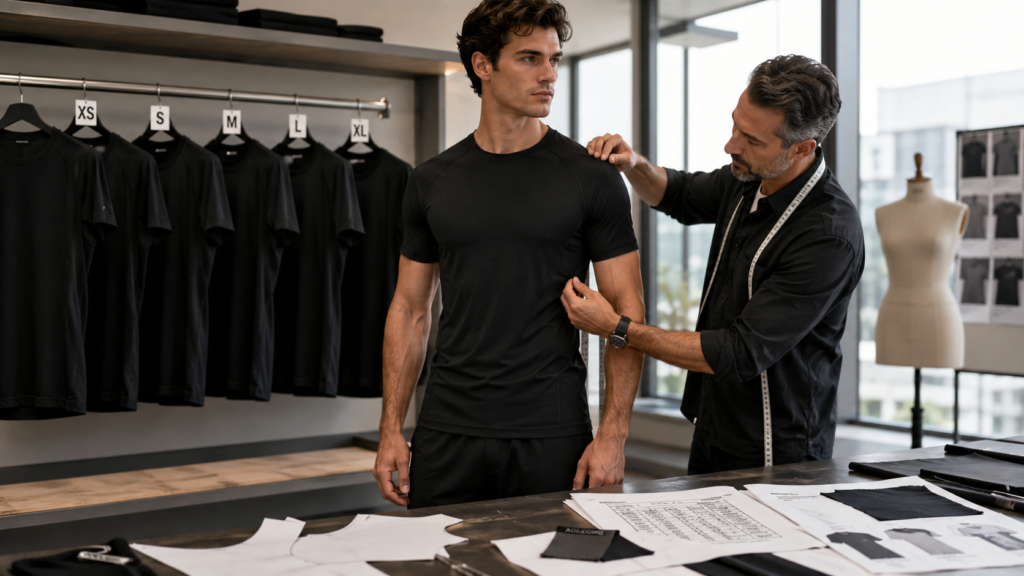
A better process may include checking measurement grading, reviewing a size set, or fitting additional key sizes before bulk production.
This requires more attention during development, but it helps protect the entire order.
6. Sampling Mistakes Can Multiply During Bulk Production
A sample is the main reference used by pattern makers, production supervisors, sewing operators, logo technicians, and quality inspectors.
When the approved sample contains an unresolved problem, that problem can be copied across the entire production order.
For example, a logo positioned slightly too low on one sample may seem like a minor detail. If the same placement is used on 1,000 garments, it becomes a large-scale error.
The same principle applies to:
- Incorrect pocket position
- Weak seam construction
- Uncomfortable label placement
- Excessive elastic tension
- Inaccurate garment length
- Poor neckline recovery
- Incorrect drawcord length
- Misaligned panels
- Unstable hem construction
Bulk manufacturing repeats the approved standard.
It does not automatically improve it.
This is why brands should not approve samples only because they want production to begin quickly.
Comments such as “acceptable for now,” “close enough,” or “we can fix it in production” create risk unless the correction is clearly documented and confirmed.
A factory may understand the requested adjustment, but the quality control team still needs a final reference that reflects the approved standard.
A pre-production sample provides that reference.
It should confirm the final fabric, fit, construction, measurements, colors, logos, labels, trims, and finishing before mass production.
7. Rework and Remakes Can Destroy Expected Margins
When a production problem is discovered, the garments may need to be repaired, altered, remade, or rejected.
Even when the factory accepts responsibility for the manufacturing problem, the brand can still experience indirect losses.
Rework can delay shipment. Repaired garments may need to be inspected again. Replacement materials may require additional ordering time. Finished products may miss a warehouse appointment or retail delivery deadline.
Some problems cannot be repaired easily.
A wrong print color, incorrect fabric, inaccurate pattern, or badly positioned cut panel may require a full remake.
If the issue affects only part of the order, the brand may receive inconsistent products from different production batches.
The financial impact can include:
- Replacement materials
- Additional labor
- Repeat quality inspections
- New packaging
- Extra storage
- Late delivery penalties
- Higher freight costs
- Cancelled customer orders
- Reduced profit margins
A product that was expected to generate a healthy margin may become barely profitable after rework and urgent shipping are added.
Investing more attention in sample development is therefore a form of risk control.
The purpose is not to create an unnecessarily perfect prototype. It is to remove the types of uncertainty that become expensive when multiplied across a bulk order.
8. Poor Samples Create Returns and Customer Service Costs
Some sampling failures are not discovered by the factory or the brand.
They are discovered by the final customer.
The product reaches the market, and customers begin reporting that the fit is inconsistent, the waistband rolls, the fabric is too thin, the seams feel uncomfortable, or the garment loses its shape after washing.
At that stage, the cost is no longer limited to manufacturing.
The brand must manage:
- Customer questions
- Return shipping
- Refunds
- Exchanges
- Product replacements
- Warehouse handling
- Inventory adjustments
- Review management
- Customer service labor
Returned activewear cannot always be resold as new, especially if it has been worn, washed, or removed from its original packaging.
A high return rate also makes inventory planning more difficult. The system may show products as sold while the brand still has to process incoming returns and replacements.
Even when the customer does not request a refund, an uncomfortable or disappointing product may prevent another purchase.
This lost repeat business is difficult to measure, but it can be more damaging than the value of the original order.
9. Product Problems Can Weaken Brand Trust
Customers do not know whether a product problem began with the fabric mill, sample room, pattern maker, sewing line, or quality control department.
They associate the problem with the brand name printed on the garment.
If a customer receives shorts with a poor fit, a hoodie with twisted seams, or a T-shirt that loses shape, they do not blame the sample development process.
They blame the fitness apparel brand.
This is one of the largest hidden costs of poor sampling.
A product issue can affect:
- Customer reviews
- Social media comments
- Influencer relationships
- Wholesale buyer confidence
- Brand reputation
- Repeat purchase rates
- Future collection performance
Marketing can create a premium image, but product experience determines whether customers believe it.
A new brand has even less room for error because customers have not yet developed strong trust.
The first collection establishes expectations. If the fit, fabric, and quality feel unreliable, customers may not return for the second launch.
Professional sample development protects more than the bulk order.
It protects the brand promise.
10. Packaging and Branding Details Must Also Be Sampled
Sample approval should not stop with the garment.
Private-label products often include neck labels, care labels, size labels, hangtags, barcodes, polybags, tissue paper, stickers, and cartons.
Errors in these areas can create additional costs and delays.
Common problems include:
- Incorrect care instructions
- Wrong fiber composition
- Unreadable label text
- Inconsistent brand colors
- Incorrect barcode information
- Hangtags attached in the wrong location
- Packaging that is too small for the garment
- Missing size stickers
- Incorrect country information
- Logo colors that do not match the approved standard
A finished garment may be ready, but shipment can still be delayed while labels or packaging are reproduced.
For brands selling through retailers, warehouses, or online marketplaces, incorrect barcodes and size labels can also create receiving and inventory problems.
Whenever possible, branding and packaging elements should be reviewed together with the pre-production sample.
What a Professional Sample Development Process Should Confirm
A reliable sampling process provides a clear bridge between the design idea and bulk manufacturing.
Before production begins, the brand and manufacturer should confirm:
Product Requirements
The product category, intended use, target customer, market positioning, quantity, and expected delivery schedule should be clear.
Fabric and Trims
The final material should be approved for composition, GSM, hand feel, color, stretch, recovery, appearance, and performance.
Zippers, drawcords, elastics, labels, and accessories should also be confirmed.
Pattern and Fit
The sample should be measured and tested on the body. Movement, comfort, proportions, and intended silhouette should be reviewed.
Construction
Seam type, stitch quality, reinforcement, pockets, waistbands, necklines, cuffs, hems, and panel alignment should match the product’s function.
Branding
Logo method, color, size, position, stretch compatibility, and washing performance should be evaluated.
Size Specifications
The base size, measurement tolerances, grading rules, and important additional sizes should be checked.
Production Feasibility
The factory should confirm that materials and construction methods can be repeated consistently within the target quantity, quality level, price, and lead time.
Final Pre-Production Approval
The final approved sample should become the production reference for bulk manufacturing and inspection.
How AOLACORE Helps Reduce Sampling Risk
AOLACORE supports activewear brands through fabric selection, pattern development, customized sampling, pre-production confirmation, bulk manufacturing, and quality inspection.
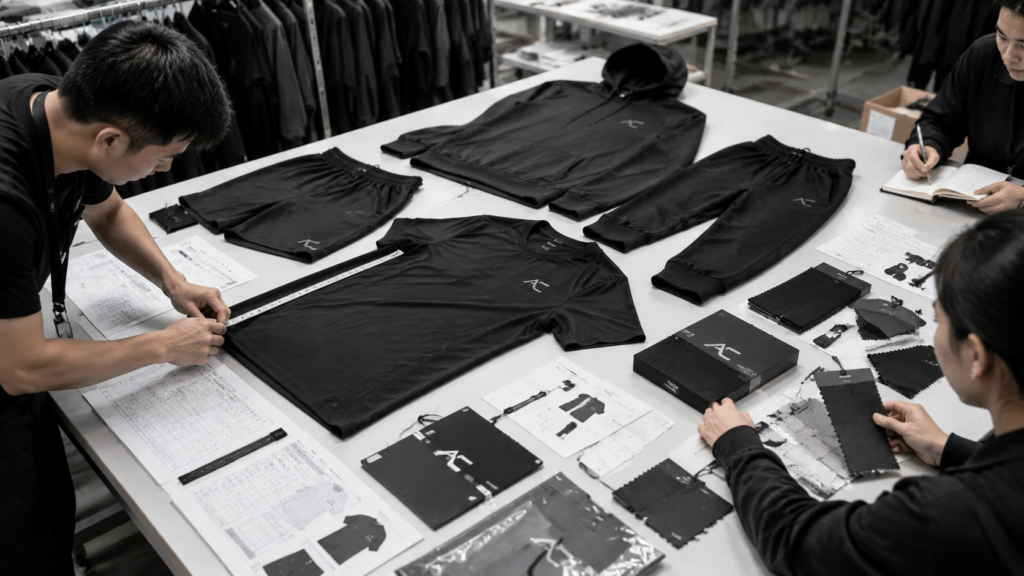
Its published manufacturing process includes fabric sourcing and testing, pattern development, sample production, pre-production sample approval, cutting, sewing, quality control, finishing, and packaging. AOLACORE also states that its sample team helps confirm fabric, fit, logo placement, labels, packaging, and size specifications before bulk production.
The company offers several sample types for different development stages, including fabric and material samples, basic prototype samples, fully customized samples, and final pre-production samples. This allows brands to evaluate individual materials, general fit, complete customization, and final bulk-production standards separately when needed.
For activewear brands, this structured process can help identify problems while they are still limited to one or a few samples.
The sampling team can review:
- Fabric suitability
- Pattern accuracy
- Fit and movement
- Garment measurements
- Stitching and construction
- Logo application
- Label details
- Packaging requirements
- Bulk production feasibility
AOLACORE also emphasizes the connection between sampling and scalable production. Its manufacturing page describes small-batch sampling, pre-production approval, in-process inspection, measurement verification, and consistency control from the first sample through repeat orders.
The objective is not simply to produce a sample that looks good in a photograph.
It is to create a reliable production reference that can be reproduced consistently during bulk manufacturing.
Final Thoughts
Sample development may represent only a small part of the total production budget, but it influences almost every cost that follows.
A poorly developed sample can lead to repeated revisions, longer development timelines, unsuitable fabric, incorrect fit, unstable grading, difficult bulk production, rework, urgent freight, customer returns, and damaged brand trust.
These costs are often hidden because they do not appear together on one invoice.
They appear gradually across production, logistics, marketing, customer service, inventory, and future sales.
A professional sampling process does not guarantee that a product will never require adjustment. Its purpose is to make those adjustments while the product is still in development and the cost of change remains manageable.
For activewear brands, the correct question is not:
“How cheaply can we make the first sample?”
The better question is:
“Does this sample give us enough confidence to reproduce the product successfully in bulk?”
When fabric, fit, construction, measurements, branding, packaging, and production feasibility are properly confirmed, the sample becomes more than a prototype.
It becomes a risk-control tool, a quality standard, and the foundation for consistent manufacturing.
Develop a Production-Ready Activewear Sample
Planning a new men’s activewear collection or improving an existing product?
AOLACORE supports fabric sourcing, pattern development, customized sampling, fit adjustments, private-label details, pre-production approval, bulk manufacturing, and quality inspection.
Whether you are developing training T-shirts, shorts, hoodies, joggers, compression wear, or a complete fitness apparel collection, a professional sample process can help identify costly problems before production begins.
Contact AOLACORE to turn your product idea into a production-ready activewear sample.
Are you looking for reliable manufacturers of clothing products?
We can quickly provide customers with market analysis, technical support and customized services.