
Understanding Stretch Fabrics: Nylon vs Polyester vs Cotton Blends
Understanding Stretch Fabrics: Nylon vs Polyester vs Cotton Blends
Fabric selection is one of the most important decisions in activewear product development.
The fabric affects how a garment feels, stretches, recovers, manages moisture, fits the body, maintains its shape, and performs after repeated washing.
It also influences the final product price and how customers perceive the brand.
Among the most common materials used in activewear are nylon, polyester, and cotton blends. Each material has different advantages, limitations, and suitable applications.
However, comparing these fabrics is not as simple as saying that one is softer or another is more durable.
The final performance also depends on:
- Fiber composition
- Spandex percentage
- Yarn quality
- Knitting structure
- Fabric weight
- Dyeing method
- Finishing treatment
- Moisture-management technology
- Stretch and recovery
- Garment construction
Two fabrics with the same composition can feel and perform very differently.
For activewear brands, the goal is therefore not to find one fabric for every product. It is to select the right fabric for each garment’s function, customer, price point, and brand positioning.
What Makes a Fabric Suitable for Activewear?
Most activewear fabrics need to support body movement while remaining comfortable and stable.
Depending on the product, a brand may need to evaluate several characteristics.
Stretch
Stretch describes how far the fabric can extend.
Four-way stretch fabrics can generally stretch both horizontally and vertically, providing greater freedom of movement for gym training, running, yoga, and other activities.
Stretch is often created by adding elastane or spandex to nylon, polyester, or cotton.
However, high stretch alone does not guarantee good performance.
Recovery
Recovery describes how effectively the fabric returns to its original shape after being stretched.
A fabric may stretch easily but recover poorly. This can cause knees, elbows, waistbands, and seat areas to become loose after repeated movement.
For fitted activewear, recovery is often more important than maximum stretch.
Moisture Management
Activewear should help move perspiration away from the skin and allow it to dry efficiently.
Synthetic fibers such as nylon and polyester generally absorb less water than cotton, although their moisture-management performance still depends heavily on the fabric structure and finishing treatment.
Breathability
Breathability is influenced by fiber type, knitting structure, fabric thickness, and ventilation design.
A dense, heavyweight synthetic fabric may feel less breathable than a lightweight cotton blend, even if the synthetic fiber itself absorbs less moisture.
Durability
Training garments must resist friction, stretching, washing, pilling, and repeated use.
The expected durability will be different for a lightweight running top and a pair of high-compression training shorts.
Hand Feel
Hand feel describes how the fabric feels when touched and worn.
It may feel smooth, soft, cool, dry, brushed, structured, lightweight, or compressive.
Hand feel is especially important for premium activewear because customers often judge quality as soon as they touch the garment.
Nylon Stretch Fabrics
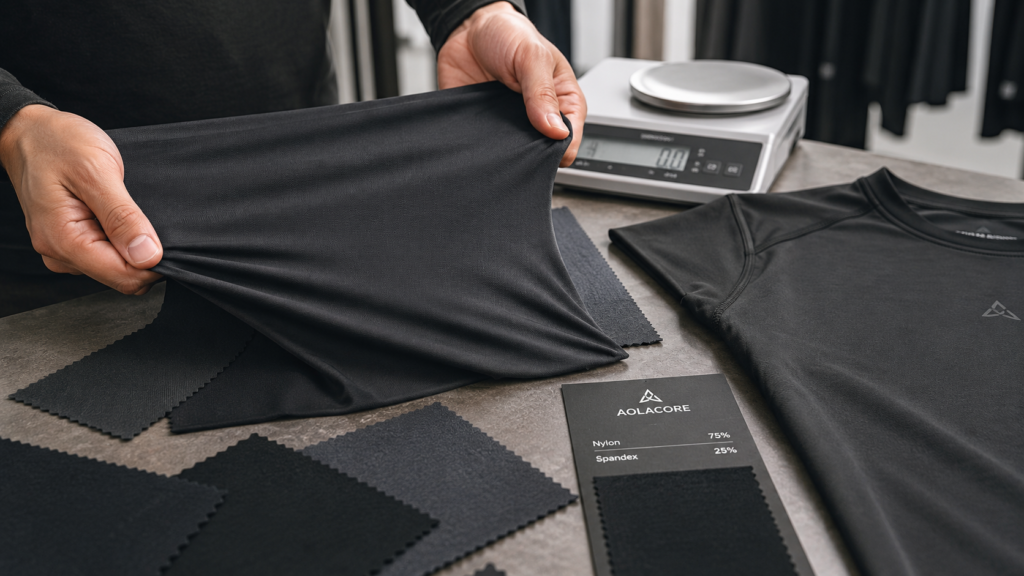
Nylon is widely used in premium activewear because of its smooth surface, softness, strength, and ability to create a refined wearing experience.
It is commonly blended with spandex to produce fitted training apparel, compression garments, seamless products, and premium athleisure pieces.
Common examples include:
- 75% nylon and 25% spandex
- 78% nylon and 22% spandex
- 80% nylon and 20% spandex
- 85% nylon and 15% spandex
The exact percentage should depend on the fabric construction and intended performance rather than following a fixed formula.
Advantages of Nylon Activewear Fabrics
Soft and Smooth Hand Feel
Nylon fabrics often feel smoother and softer than basic polyester fabrics.
This can help create a premium first impression, particularly for products worn close to the skin.
A high-quality nylon-spandex fabric may provide a clean, cool, and slightly silky surface without feeling excessively shiny.
This makes nylon popular for:
- Compression tops
- Fitted training shirts
- Base layers
- Performance shorts
- Premium joggers
- Seamless activewear
- Lifestyle athleisure products
Strong Stretch and Recovery
When correctly engineered, nylon-spandex fabrics can offer excellent four-way stretch and stable recovery.
They can follow body movement while maintaining a close fit.
This is particularly useful for products that need support, shape retention, and freedom of movement.
Good Abrasion Resistance
Nylon is generally resistant to abrasion, making it suitable for garments exposed to friction from equipment, body movement, or repeated wear.
However, abrasion resistance still depends on the yarn, knit structure, surface finishing, and fabric weight.
Premium Appearance
Nylon can create a dense, smooth, and refined surface.
For brands targeting the premium activewear market, this appearance can support higher-value product positioning.
It also works well for minimalist designs where fabric quality is a major part of the visual identity.
Limitations of Nylon Fabrics
Nylon is often more expensive than standard polyester.
This may increase the final garment cost, especially when using high-quality yarn, custom dyeing, performance finishing, or a high spandex percentage.
Some nylon fabrics may also absorb more moisture than polyester. Although they can still perform well during exercise, drying speed will depend on the fabric structure and treatment.
Color consistency must be managed carefully. Different dyeing conditions can affect the final shade, particularly when matching nylon fabric with polyester trims, mesh, zippers, or threads.
Nylon is therefore a strong option when softness, stretch recovery, comfort, and premium positioning are priorities, but it must be selected and tested carefully.
Polyester Stretch Fabrics
Polyester is one of the most widely used fibers in activewear manufacturing.
It is valued for its durability, shape stability, color performance, moisture-management potential, and relatively accessible cost.
Like nylon, polyester is frequently blended with spandex.
Common compositions include:
- 88% polyester and 12% spandex
- 90% polyester and 10% spandex
- 92% polyester and 8% spandex
- 95% polyester and 5% spandex
A lower spandex percentage may be suitable for relaxed training tops, while more fitted garments may require greater stretch and recovery.
Advantages of Polyester Activewear Fabrics
Moisture-Management Potential
Polyester absorbs relatively little water.
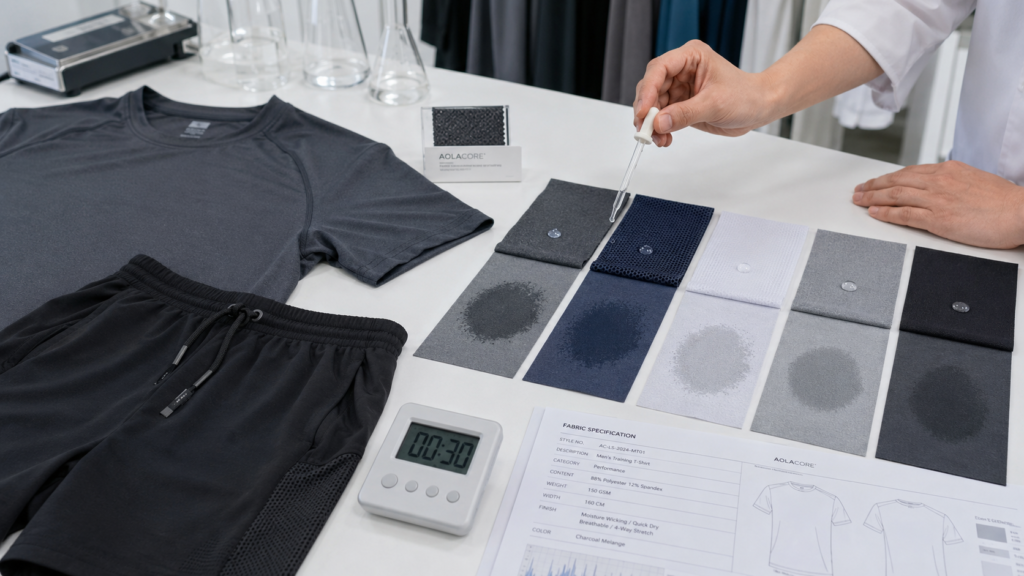
When combined with an appropriate knitting structure and moisture-wicking finish, it can move perspiration across the fabric surface and support faster drying.
This makes polyester a common choice for:
- Running T-shirts
- Gym tops
- Training shorts
- Sports jerseys
- Lightweight jackets
- Performance mesh panels
- Teamwear
It is important to understand that polyester is not automatically moisture-wicking.
Moisture performance depends on yarn design, fabric structure, chemical finishing, and garment construction.
A poorly developed polyester fabric may still feel hot or uncomfortable.
Good Color Stability
Polyester generally performs well for bright colors, dark shades, and sublimation printing.
Sublimation allows graphics to become part of the fabric rather than sitting heavily on the surface.
This makes polyester particularly suitable for printed jerseys, teamwear, running apparel, and products with all-over graphics.
Durability and Shape Retention
Polyester can provide good resistance to repeated washing, stretching, and daily use.
It also tends to maintain its shape well when the fabric has been properly developed.
For activewear brands producing high-volume commercial products, this balance of durability and cost can be valuable.
Flexible Price Positioning
Polyester is available in a wide range of quality levels.
Brands can choose basic commercial fabrics, lightweight performance knits, recycled polyester, brushed fabrics, mesh structures, or premium microfibre options.
This gives product developers flexibility across different price ranges.
Limitations of Polyester Fabrics
Basic polyester can feel less soft or refined than premium nylon.
Some fabrics may feel dry, rough, shiny, or overly synthetic, especially when low-quality yarns or simple finishing methods are used.
Polyester can also retain body odor if the fabric structure and finishing are not designed to manage it.
For products worn during high-intensity training, odor-management treatment or more breathable construction may be required.
The surface may develop pilling or snagging if the yarn and knit structure are unsuitable for the intended activity.
A high-quality polyester fabric can perform extremely well, but composition alone does not indicate quality. Brands should compare actual fabric samples and test the material in the intended garment.
Cotton-Blend Stretch Fabrics
Cotton is valued for its natural softness, familiar hand feel, comfort, and casual appearance.
However, pure cotton is not usually the first choice for high-performance activewear because it absorbs moisture and can become heavy during intense exercise.
To improve its performance, cotton is often blended with polyester, nylon, or spandex.
Common examples include:
- Cotton-polyester blends
- Cotton-spandex jersey
- Cotton-polyester-spandex blends
- Cotton-modal-spandex blends
- Cotton-rich French terry
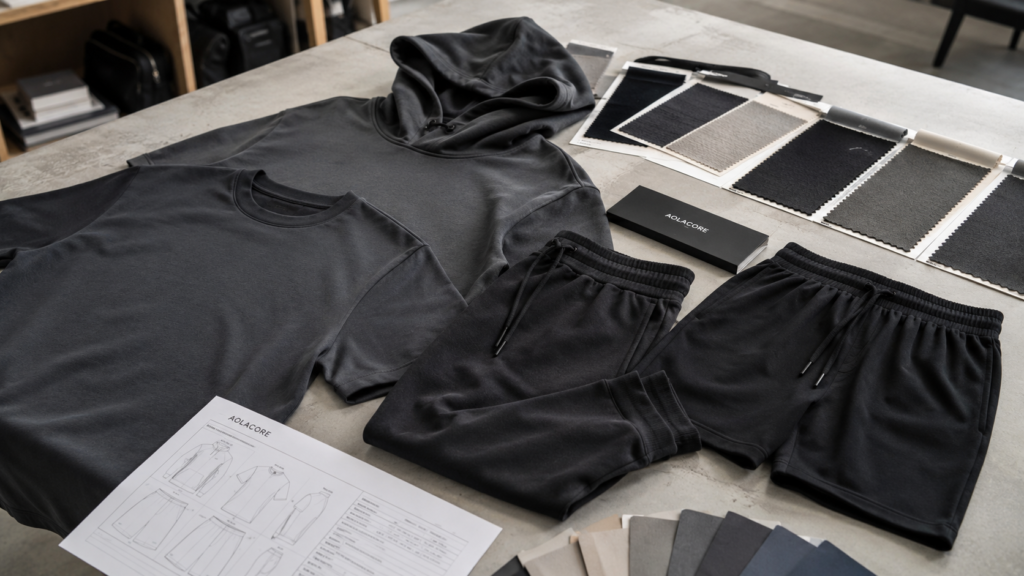
These materials are especially common in athleisure, casual gymwear, warm-up clothing, hoodies, joggers, and lifestyle products.
Advantages of Cotton Blends
Familiar and Comfortable Hand Feel
Many customers already associate cotton with comfort.
Cotton-rich fabrics can feel soft, breathable, and natural against the skin, making them suitable for products worn before or after training.
They also work well for fitness brands that want a lifestyle, streetwear, or casual positioning.
Matte and Natural Appearance
Cotton blends often have a less shiny surface than synthetic performance fabrics.
This can create a relaxed, premium-casual appearance that works well for oversized T-shirts, sweatshirts, hoodies, and joggers.
Versatility
Cotton can be combined with other fibers to balance comfort and performance.
Polyester can improve durability and drying speed. Spandex can increase stretch and help the garment recover more effectively. Modal can create a softer and smoother hand feel.
This makes cotton blends highly adaptable.
Suitable for Structured Products
Heavier cotton-blend jersey and French terry can provide the structure needed for premium T-shirts, sweatshirts, hoodies, shorts, and joggers.
These fabrics can create clean silhouettes that are suitable for both training and everyday wear.
Limitations of Cotton Blends
Cotton absorbs more moisture than nylon or polyester.
During intense exercise, the fabric may become wet, heavy, and slower to dry.
For this reason, cotton-rich fabrics are usually better suited to:
- Low-intensity workouts
- Warm-ups
- Travel
- Recovery wear
- Gym-to-street collections
- Casual fitness apparel
- Hoodies and joggers
Cotton fabrics may also shrink, twist, fade, or lose shape if the material and finishing are not properly controlled.
Adding polyester and spandex can improve stability, but wash testing is still important before bulk production.
Brands should also consider the relationship between cotton content and product expectations. A customer buying a technical running shirt may expect faster drying, while a customer buying a heavyweight gym T-shirt may value structure and softness more than moisture performance.
Nylon vs Polyester vs Cotton Blends: Key Differences
Each fabric family offers a different balance of performance, comfort, appearance, and cost.
Hand Feel
Nylon commonly provides the smoothest and most refined hand feel.
Polyester can range from basic and dry to soft and premium depending on yarn and finishing.
Cotton blends usually feel familiar, soft, natural, and comfortable.
Moisture Performance
Polyester generally offers strong drying potential because it absorbs little water.
Nylon can also work well in performance apparel but may absorb slightly more moisture depending on the fabric.
Cotton absorbs more moisture and usually dries more slowly.
Stretch and Recovery
Both nylon-spandex and polyester-spandex fabrics can offer strong stretch and recovery.
The final result depends more on fabric engineering than fiber name alone.
Cotton blends can provide comfortable stretch, but high cotton content may reduce recovery and shape stability.
Durability
Nylon is known for strength and abrasion resistance.
Polyester offers good durability, washing stability, and shape retention.
Cotton blends can be durable, particularly in heavyweight constructions, but may be more sensitive to shrinkage, fading, and shape changes.
Appearance
Nylon often creates a smooth, premium technical appearance.
Polyester offers versatility, from lightweight sportswear to bright sublimated products.
Cotton blends create a matte, structured, and casual appearance.
Cost
Polyester generally offers the broadest range of cost-effective options.
Nylon is often more expensive, particularly for premium-quality fabrics.
Cotton-blend pricing varies depending on cotton quality, weight, finishing, and the additional fibers used.
Which Fabric Is Best for Different Activewear Products?
There is no single best fabric for every activewear category.
Training T-Shirts
For lightweight, moisture-focused training T-shirts, polyester-spandex can be a practical option.
For fitted premium T-shirts with a smooth hand feel, nylon-spandex may be more suitable.
For oversized gym T-shirts and lifestyle products, cotton-polyester-spandex blends can provide comfort and structure.
Training Shorts
Polyester-spandex works well for lightweight running and general gym shorts.
Nylon-spandex can create softer, more flexible premium training shorts.
Cotton blends may be suitable for casual gym shorts, warm-ups, and athleisure styles.
Compression Products
Nylon-spandex is frequently selected for premium compression products because of its soft surface and strong recovery.
High-quality polyester-spandex can also be used when moisture performance, durability, or cost control is the priority.
Hoodies and Joggers
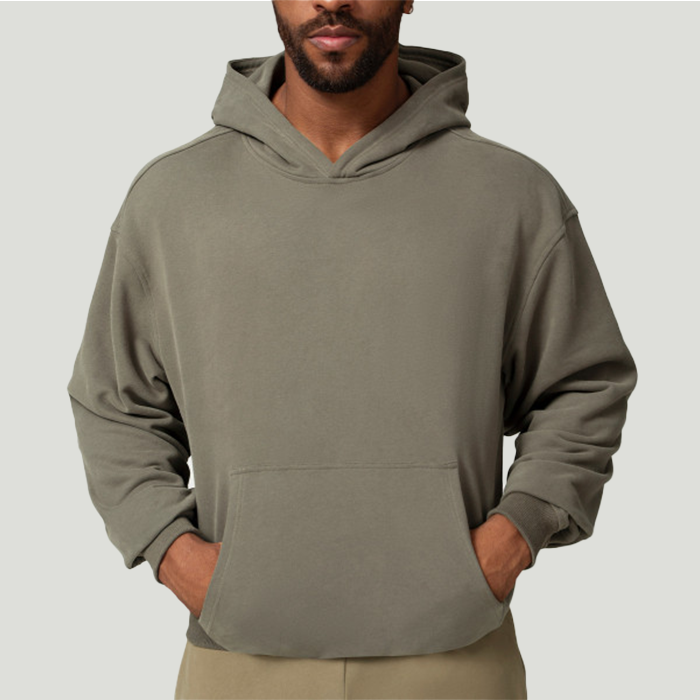
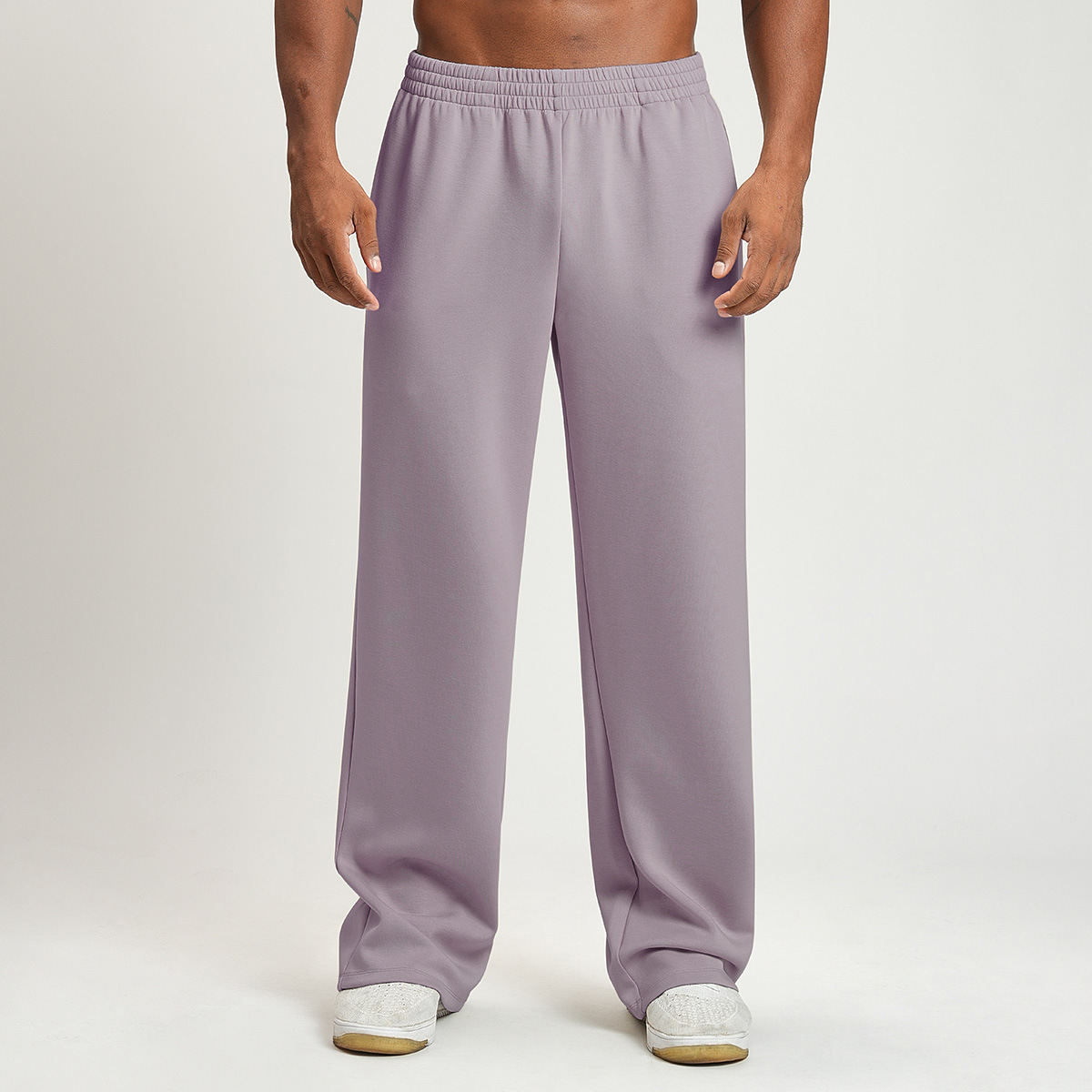
Cotton-polyester French terry is a common option for soft, structured lifestyle garments.
Polyester blends can provide greater shape stability and faster drying.
Nylon blends may be used for more technical joggers, travel pants, or smooth performance layers.
Running Apparel
Lightweight polyester fabrics are commonly used because of their drying performance and suitability for breathable mesh construction.
Nylon may be selected for premium lightweight jackets, fitted base layers, or products requiring a softer hand feel.
Why Fabric Testing Matters More Than Composition Labels
A fabric composition label provides useful information, but it does not tell the complete story.
For example, two fabrics may both be labeled 75% nylon and 25% spandex, but one may be soft and stable while the other feels shiny, heavy, or weak.
Before approving a fabric, brands should evaluate:
- GSM
- Hand feel
- Stretch percentage
- Recovery
- Opacity
- Moisture management
- Drying speed
- Pilling resistance
- Abrasion resistance
- Colorfastness
- Shrinkage
- Washing stability
The fabric should also be tested as a finished garment.
Sewing tension, seam type, logo application, pattern measurements, and garment construction can change how the fabric behaves.
A material that performs well as a swatch may feel different after it is cut, sewn, stretched, printed, and washed.
How AOLACORE Helps Brands Select Activewear Fabrics
AOLACORE helps brands evaluate fabrics according to the intended product, activity, customer profile, price range, and brand positioning.
Rather than recommending one standard material for every design, the development process considers:
- Required softness
- Product structure
- Stretch and recovery
- Fabric weight
- Moisture-management needs
- Breathability
- Durability
- Color requirements
- Target cost
- Intended wearing environment
For men’s training T-shirts, shorts, compression wear, hoodies, joggers, and other activewear products, AOLACORE can source or develop different nylon, polyester, and cotton-blend options.
Fabric swatches can be compared before sample development. Samples then allow the brand to review the material as a complete garment and evaluate fit, movement, comfort, construction, and appearance.
The final fabric specification should be confirmed before bulk production, including composition, weight, color, hand feel, stretch, and performance requirements.
This process helps reduce the risk of selecting a fabric that looks suitable in a photograph but does not meet the product’s actual needs.
Are you looking for reliable manufacturers of clothing products?
We can quickly provide customers with market analysis, technical support and customized services.